What Type of Dog Shelter Is Best for Your Needs?
Choosing the right Dog Shelter involves more than comparing colors, prices, or attractive photographs. A shelter must protect your dog from heat, rain, wind, insects, and stressful surroundings. It should also support healthy rest, safe movement, and easy cleaning. A raised kennel may suit a wet backyard, while a soft indoor crate may work better for a small dog. Large breeds need strong frames and enough room to turn comfortably. Puppies and older dogs often need extra warmth and easier access.
The best choice depends on your dog’s size, coat, age, temperament, and daily routine. Veterinary guidance commonly emphasizes ventilation, shade, dry bedding, and protection from extreme temperatures. Experienced owners also notice practical details, such as sharp edges, loose hinges, trapped moisture, and difficult doors. These small flaws can become serious problems over time. They are easy to miss.
This guide will compare indoor crates, outdoor kennels, insulated houses, portable shelters, and flexible crate-and-pen systems. Each option has useful strengths and possible weaknesses. A waterproof shelter might still become dangerously hot under direct sunlight. A comfortable crate might offer too little exercise space. No design solves every need. Your observations matter, even when the decision feels uncertain. Before buying, measure your dog while standing, lying, and turning. Then consider the shelter’s location, maintenance demands, and long-term durability. A thoughtful choice protects comfort, safety, and trust.
Define Your Dog’s Needs with AKC Size Categories and Daily-Use Data
Choosing a dog shelter starts with body size, but daily habits matter just as much. The American Kennel Club groups dogs by toy, small, medium, large, and giant categories. These labels offer a useful starting point for shelter dimensions. Measure your dog while standing, then add room for turning, stretching, and a thick bed.
Daily use changes the decision. The 2023–2024 National Pet Owners Survey reported about 65.1 million American households owned a dog. That scale shows how varied real home routines can be. A small, covered shelter may suit a calm toy-sized dog, but not one that spends hours outdoors. A large dog needs stronger flooring, wider entry space, and better airflow. Giant breeds need special attention to shoulder height and joint comfort.
Movement also matters. The Association for Pet Obesity Prevention reported that about 59% of U.S. dogs were overweight or obese in 2022. A shelter should not become a cramped storage box. Leave enough interior space for natural posture, but avoid excessive empty space in cold conditions. I would measure twice, especially for growing dogs. These figures help, but they cannot replace observing your dog’s breathing, sleeping position, and daily weather exposure.
Apply the 1.25× Body-Length Fit Benchmark and 75% Door-Height Rule
What Type of Dog Shelter Is Best for Your Needs?
A practical shelter should fit your dog closely, not feel like an empty room. Measure from the nose to the base of the tail while your dog stands naturally. Choose an interior length near 1.25 times that body length. This gives space to turn, stretch, and settle without wasting warmth. Measure shoulder width and sleeping posture too. A narrow shelter may meet the length rule but still feel cramped.
The doorway needs careful attention. Measure from the ground to the top of your dog’s shoulders, then use about 75% of that height as a starting point for the opening. Your dog should enter without striking its back, yet the doorway should not be oversized. A smaller opening can reduce drafts and help retain body heat. Watch your dog walk through it. Real movement matters more than a tape measure.
I have seen dogs reject shelters that looked perfectly sized on paper. Some dislike raised thresholds, dark interiors, or slippery floors. Others need extra turning space because of age, stiffness, or thick coats. Recheck the fit after seasonal grooming and weight changes. The 1.25× and 75% rules are useful benchmarks, not rigid laws. If your dog hesitates, scrapes its shoulders, or cannot turn comfortably, adjust the design. A little extra room may be wiser than perfect arithmetic.
What Type of Dog Shelter Is Best for Your Needs? — Apply the 1.25× Body-Length Fit Benchmark and 75% Door-Height Rule
Planning guide based on representative adult dog measurements. Interior dimensions are starting points and should be adjusted to the individual dog's body shape, sleeping position, bedding, and local weather conditions.
| Dog Size Category |
Representative Body Length
(Nose to Tail Base) |
Typical Shoulder Height |
Minimum Interior Length
(1.25× Body Length) |
Suggested Interior Width |
Suggested Interior Height |
Target Door Height
(75% of Shoulder Height) |
Suitable Shelter Type |
| Small |
18 in
(46 cm) |
12 in
(30 cm) |
22.5 in
(57 cm) |
18 in
(46 cm) |
18 in
(46 cm) |
9 in
(23 cm) |
Compact insulated shelter with a low, draft-reducing entrance |
| Medium |
26 in
(66 cm) |
18 in
(46 cm) |
32.5 in
(83 cm) |
26 in
(66 cm) |
24 in
(61 cm) |
13.5 in
(34 cm) |
Insulated shelter with enough room to turn around without excess unused space |
| Large |
34 in
(86 cm) |
24 in
(61 cm) |
42.5 in
(108 cm) |
34 in
(86 cm) |
30 in
(76 cm) |
18 in
(46 cm) |
Sturdy weather-resistant shelter with a reinforced floor and protected doorway |
| Extra Large |
42 in
(107 cm) |
29 in
(74 cm) |
52.5 in
(133 cm) |
42 in
(107 cm) |
35 in
(89 cm) |
21.75 in
(55 cm) |
Large insulated shelter with strong ventilation and a wide, stable base |
| Giant |
50 in
(127 cm) |
34 in
(86 cm) |
62.5 in
(159 cm) |
50 in
(127 cm) |
40 in
(102 cm) |
25.5 in
(65 cm) |
Custom-built shelter with reinforced framing, insulation, and a spacious entry |
How to use the measurements: Measure the dog from the nose to the base of the tail for body length and from the floor to the top of the shoulder for shoulder height. Multiply body length by 1.25 to estimate the minimum interior length, and multiply shoulder height by 0.75 to estimate the target door height. The dog should be able to enter, turn around, lie down fully, and sit without the roof restricting movement.
Compare Indoor, Outdoor, Insulated, and Portable Shelter Designs
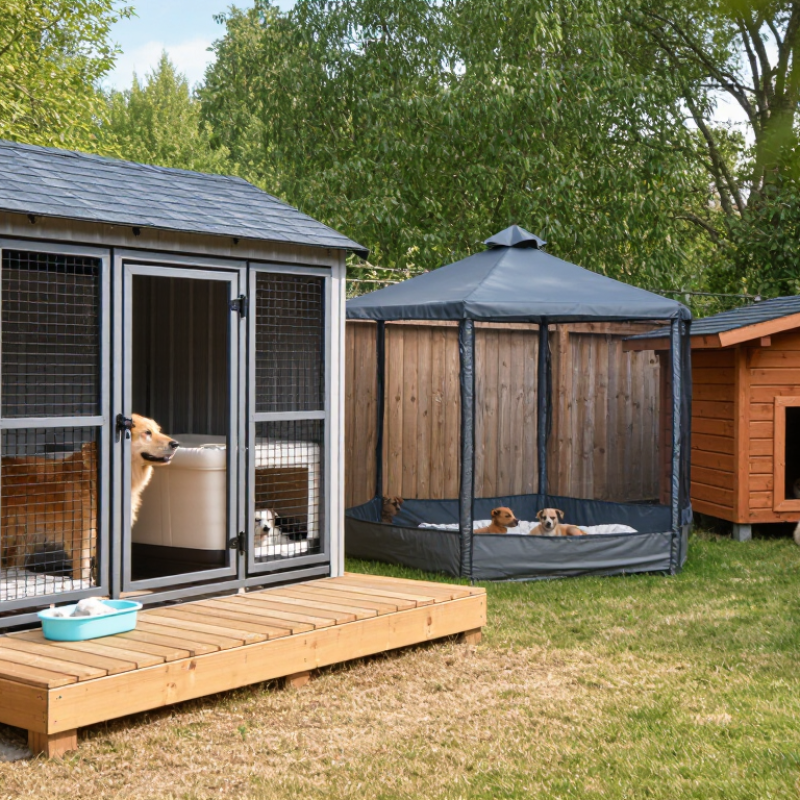
Choosing a dog shelter starts with your dog’s daily routine, not its appearance. I have seen dogs ignore spacious shelters because the doorway faced strong wind. An indoor shelter suits dogs that sleep inside and need a quiet retreat. Place it away from heating vents, busy hallways, and damp floors. A washable mat helps, but some dogs still prefer a cool tile surface.
Outdoor shelters require careful attention to drainage, shade, and airflow. The floor should sit above wet ground, while the entrance should block direct rain without trapping heat. Insulated walls help during cold nights, but insulation alone cannot replace fresh air or regular checks. Watch your dog’s breathing and posture. These details reveal discomfort earlier than many owners expect.
Portable shelters work well for travel, temporary visits, or changing rooms. They should fold securely, resist sudden movement, and provide enough height for standing and turning. Test one indoors before taking it outside. I once chose a lightweight shelter that was easy to carry but unstable on grass. That mistake changed my preference for heavier bases and stronger fasteners. Measure your dog carefully, then allow extra space for stretching without making the shelter so large that body heat disappears. Rescue workers and veterinary professionals often recommend simple designs because they are easier to inspect, clean, and adapt when weather or health needs change.
Match Insulation and Ventilation to USDA APHIS Housing Standards
What Type of Dog Shelter Is Best for Your Needs?
A suitable dog shelter should match USDA APHIS housing expectations, not just look attractive. The Animal Welfare Act requires regulated facilities to provide protection from rain, snow, wind, direct sun, and temperature extremes. A shelter should also allow the dog to stand, turn, lie down, and move comfortably. Size matters.
Insulation helps maintain stable indoor conditions during cold weather. Use sealed walls, a raised floor, and dry bedding that does not stay damp. Ventilation is equally important. Fresh air should reduce moisture, odors, and ammonia without creating a cold draft. Wire openings can improve airflow, but they should not expose dogs to harsh weather. In warm climates, shaded areas and cross-ventilation can prevent dangerous heat buildup.
Coat type, age, body condition, and health all change the right choice. A short-haired senior dog may need more insulation than a healthy, thick-coated adult. I would also check the shelter several times daily. Surfaces can feel dry while humidity remains high. That mistake is easy to make. USDA APHIS rules may apply differently to commercial or research facilities, while local standards can be stricter. Review the current requirements and ask a qualified veterinarian or animal-care inspector to assess airflow, temperature, drainage, and cleanliness. A shelter may meet basic dimensions yet still fail the dog’s daily needs.
What Type of Dog Shelter Is Best for Your Needs?
Match insulation and ventilation decisions to USDA APHIS housing standards.
Floor space
USDA APHIS requires the primary enclosure to be at least 6 inches longer than the dog’s body length in each direction.
Vertical clearance
The enclosure must provide at least 6 inches of clearance above the head of the tallest dog when standing normally.
Insulation and ventilation
Use insulation to reduce heat loss and drafts, while providing fresh-air movement that prevents moisture condensation, odors, and ammonia buildup.
The chart uses representative body measurements to demonstrate the USDA APHIS clearance formula. Confirm the dog’s actual body length and standing height before selecting or building a shelter.
Verify Drainage and Cleaning with CDC Animal-Hygiene Guidance
What Type of Dog Shelter Is Best for Your Needs?
Verify Drainage and Cleaning with CDC Animal-Hygiene Guidance
A good dog shelter should keep animals dry, comfortable, and easy to monitor. Drainage matters more than decorative features. Choose a floor with a gentle slope toward a controlled drain. Water should not collect beneath bedding or near food bowls. Smooth, sealed surfaces usually support routine cleaning better than rough wood. Still, I once underestimated small cracks. They held moisture and unpleasant odors longer than expected.
CDC animal-hygiene guidance emphasizes cleaning, disinfection, hand hygiene, and separation between animal areas. Remove waste before washing surfaces. Use dedicated tools for kennel floors, food areas, and waste zones. Rinse away visible dirt, then apply a suitable disinfectant according to its label. Allow the required contact time. Never return a dog to a wet or poorly ventilated space. Check drainage after heavy rain, not only during dry weather.
Tips:
Look underneath the shelter before buying. A raised base can improve airflow and reduce dampness. Test the floor with a small amount of water. Watch where it moves. Keep bedding washable and replace it when seams stay wet. Provide a handwashing station near the entrance. Clean high-touch points, including latches and gate handles. These details seem minor, but they often reveal whether daily hygiene will remain practical. My own mistake was choosing convenience over inspection. That choice made cleaning harder every morning.