2026 Top Types of Dog Balls for Global Buyers?

Dog Balls may look like a simple product, but global buyers face a crowded mix of materials, shapes, and play styles. A ball that bounces sharply on a paved yard may behave very differently on grass or sand. Size matters, too. A small ball can disappear beneath a sofa, while an oversized one may frustrate a small dog.

The market sits within a much larger pet economy. The American Pet Products Association’s 2025 State of the Industry report estimated U.S. pet-industry spending at $152 billion in 2024. That figure is not a Dog Balls sales estimate, and public reports rarely separate ball sales from wider toy categories. Buyers should treat broad market numbers as context, not proof of demand for any single design. A gap remains.

Product choices should start with the dog, not the shelf. Veterinary behaviorist Dr. Lisa Radosta’s work emphasizes that canine needs and behavior vary between individuals. A practical takeaway is simple: match the ball to the dog’s size, chewing habits, and preferred game. No toy suits every dog. Supervision still matters, especially when a ball becomes cracked, split, or small enough to swallow.

This guide compares common options, including rubber, tennis-style, foam, and interactive balls. It considers bounce, grip, visibility, cleaning, and likely use cases. A bright ball can be easy to spot in long grass, yet its color alone says little about durability. The best choice may be less exciting than expected. It should fit the dog, the play space, and the buyer’s quality checks.
2026 Top Types of Dog Balls for Global Buyers?

What Dog Balls Are and How They Support Play, Exercise, and Training

Dog balls are rounded toys made for a dog to chase, carry, or retrieve. They may be made from rubber, foam, or tightly woven fabric, with different sizes and surface textures. The right size should be easy for the dog to pick up but too large to swallow. That detail matters. A ball that is too hard may be uncomfortable for some dogs, while a soft ball can wear down quickly with strong chewers. Check the toy for cracks, loose pieces, or deep tooth marks before play. Replace it when damaged.

A ball can turn a short backyard session into useful movement. Toss it across a clear patch of grass, then allow the dog time to return and rest. Repeated chasing can be tiring, so adjust the pace to the dog’s age, fitness, and comfort. Watch for heavy panting or slowing down. Pause when needed. For training, use gentle throws to practise cues such as “come” or “drop.” Rewarding a calm return can make the game more controlled. Some dogs prefer sniffing or carrying the ball over fetching it, and that is fine. A ball does not suit every dog, every day. Supervise play, especially with puppies and dogs that chew toys apart.

Major Types of Dog Balls and Their Distinctive Features

2026 Top Types of Dog Balls for Global Buyers?

Dog balls differ in bounce, texture, weight, and intended play. Solid rubber balls are dense and springy, making them useful for fetch and many chewing sessions. Their firmness can be uncomfortable for small dogs, so check the ball’s size and flexibility. Fit matters most.

Hollow treat-dispensing balls add mental activity: dogs nose or roll them to release food. Openings should be large enough to clean, but not so wide that the contents spill immediately. Felt-covered balls resemble tennis balls and roll smoothly across grass, though the surface can wear down with repeated chewing. Lightweight foam balls travel easily and suit gentle games, but may not last with determined chewers. Squeaker balls attract attention; supervision helps prevent access to damaged squeakers. Not every dog agrees.

For buyers comparing products, request clear material details, dimensions, weight, and care guidance. Inspect seams, openings, and surface finish, since small defects can affect durability. Test samples with the intended dog size and play style before placing a large order. No ball is indestructible, and even a well-made toy needs regular inspection.

Materials, Sizes, and Safety Designs Used in Dog Balls

2026 Top Types of Dog Balls for Global Buyers?

Dog balls vary in material, bounce, and intended play style. Natural rubber often offers a resilient feel, while softer foam suits gentle indoor games. Woven fabric balls can be easier to grip, but may wear quickly under persistent chewing. Some buyers prefer hollow designs that accept treats or allow airflow. No material works for every dog. Even a well-made ball can fail when matched with a strong chewer.

Size and safety deserve close attention. Choose a ball too large to swallow, but small enough for your dog to carry comfortably. Check seams, coatings, and openings for loose parts or sharp edges. A ball with a hole may reduce suction risk, though its size and shape still matter. Replace damaged toys promptly. It sounds obvious, but worn toys often stay in the basket too long.

Tips: Measure your dog’s mouth before ordering, and review product dimensions rather than relying on “small” or “large” labels. Test a new ball during supervised play. Watch for cracking, flattened areas, or missing pieces, and clean it according to the material’s care instructions. For global buyers, clear sizing charts and material details make comparisons easier, though real-world durability can still vary by dog and play environment.

How to Match Dog Ball Types to Dogs and Their Activities

Matching a dog ball to its user starts with the dog, not the product label. For energetic dogs that love fetch, a lightweight rubber or foam ball is easy to throw and spot on grass. Choose a diameter too large to swallow, yet small enough for a comfortable grip. Check the size guidance, then watch how the dog carries it. Fit varies.

Chewers need a different approach. A dense ball designed for chewing may last longer, but no ball is truly indestructible. Pick one that cannot lodge behind the jaw, and supervise play, especially with strong biters. Remove it if the surface splits, flakes, or exposes an inner layer. A ball is not automatically a chew toy.

For water games, choose a buoyant, bright-colored ball and test it in shallow water first. Small dogs and puppies often manage softer, lighter balls more easily; older dogs may prefer slow rolls on smooth floors. Sound-sensitive dogs might avoid squeakers. Not every dog agrees. Labels help, but they are imperfect: a retriever may destroy a ball, while a calm dog may enjoy chasing. Watch actual play and reassess as teeth, strength, and habits change.

2026 Top Types of Dog Balls for Global Buyers? - How to Match Dog Ball Types to Dogs and Their Activities
Dog Ball Type Typical Construction Best-Matched Activities Dogs and Play Styles to Consider Buyer Checks and Safety Notes
Solid Rubber Ball One-piece or molded rubber construction; firmness and bounce vary by design. Fetch, supervised chewing, and outdoor play on suitable surfaces. Active dogs that enjoy chasing or carrying a durable-feeling ball. Choose a size suited to the individual dog rather than breed alone. Check that the ball cannot be swallowed or lodged in the throat. Inspect for cracks, deep tooth marks, or loose pieces; replace damaged toys.
Hollow Rubber Ball Lightweight hollow body, sometimes with openings or textured surfaces. Fetch, rolling games, and interactive play. Dogs that prefer a lighter ball or enjoy gripping and carrying toys. Confirm that openings and wall thickness are appropriate for the dog's chewing strength. Supervise strong chewers and check regularly for tears.
Felt-Covered Tennis-Style Ball Small, lightweight ball with a fabric-like outer covering; some versions are made specifically as dog toys. Short fetch sessions on clean, open ground. Dogs that enjoy a familiar, easy-to-carry ball and are not persistent chewers. Sports tennis balls are not designed as dog toys. Abrasive or dirty felt can wear tooth surfaces, and a damaged ball may become a choking hazard. Use a dog-specific product and supervise play.
Foam Fetch Ball Soft, lightweight foam or similar buoyant material. Gentle fetch and low-impact indoor or outdoor games, depending on the product. Dogs that prefer a softer, lighter toy and are unlikely to chew or shred foam. Not a good choice for dogs that swallow pieces or are strong chewers. Remove the ball if it becomes torn or starts shedding material.
Treat-Dispensing Ball Usually a hollow body with one or more openings for dry treats or kibble. Food-based enrichment, supervised rolling, and slower-paced play. Food-motivated dogs that enjoy working to release small portions of food. Check opening size, cleaning access, and material suitability for the dog's chewing habits. Use treats that fit the product and include them in the dog's daily food allowance.
Squeaky Ball Rubber, vinyl, or other toy material with an internal squeaker. Interactive play and short supervised games. Dogs that respond to sound and enjoy carrying or chasing toys without dismantling them. Supervise dogs that bite through toys. Remove the ball if the squeaker or internal parts become exposed; swallowed components can cause harm.
Floating Water Ball Buoyant material designed to remain visible or float at the water's surface. Fetch in a pool or other safe, supervised water setting. Dogs that are comfortable around water and enjoy retrieving; swimming ability varies between individual dogs. Choose a size that is easy to see and retrieve. A toy does not replace close supervision, a safe entry and exit point, or appropriate water-safety measures.
Light-Up Ball Ball with a light-emitting component or reflective feature, depending on the design. Low-light visibility during supervised outdoor play. Dogs that enjoy fetch at dawn or dusk, provided the toy's size and construction suit them. Check that electronic components and battery compartments are secured and inaccessible during play. Do not use a damaged ball; visibility features do not replace supervision.
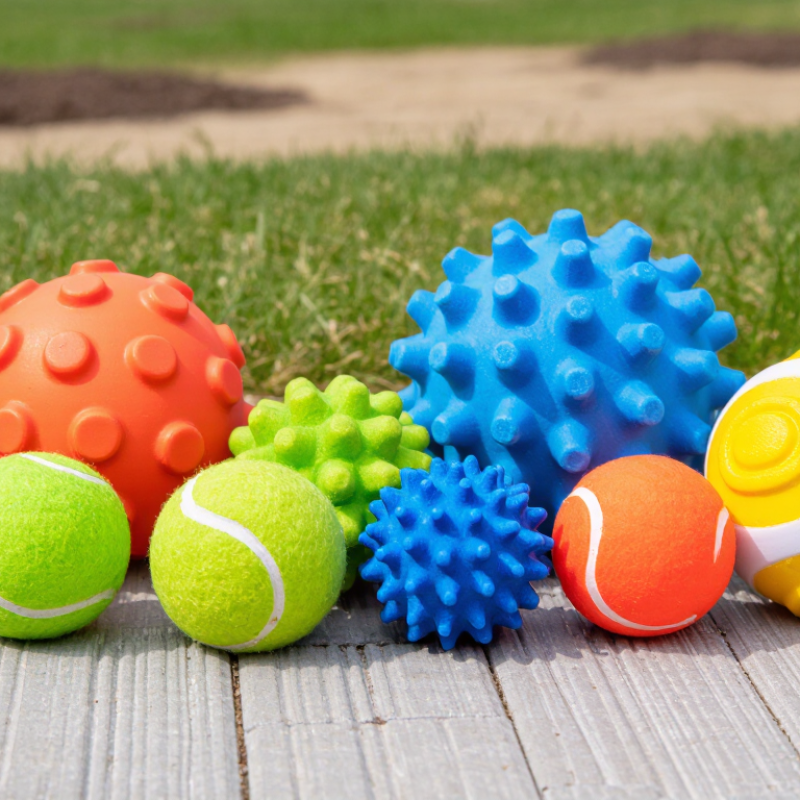
Textured or Easy-Grip Ball Raised patterns, grooves, or flexible surfaces intended to make the ball easier to grip. Fetch, carrying, and interactive play on land. Dogs that prefer a tactile surface or find smooth balls difficult to pick up. Check that raised details are firmly attached and do not create small detachable pieces. Select a ball large enough to reduce swallowing risk.

Key Factors Global Buyers Should Assess When Sourcing Dog Balls in 2026

2026 Top Types of Dog Balls for Global Buyers

When sourcing fetch, floating, or treat-dispensing balls, buyers should assess use before appearance. A ball for indoor play needs a different surface and bounce from one used outdoors. Check diameter against the intended dog size, and test whether the ball can be gripped without being swallowed. Small details matter.

Material claims need evidence. Request independent test reports covering mechanical strength, small-part risks, and material composition, then confirm the reports match the exact product and production version. Ask suppliers how they check batches for size, weight, odor, and finish defects. Test wet, too. A checklist can still miss how a ball behaves after repeated chewing or washing, so sample testing under realistic use is valuable.

Cost and logistics also shape the decision. Compare unit price with packaging dimensions, carton quantity, shipping volume, and expected defect rates. The American Pet Products Association’s 2025 State of the Industry report put U.S. pet-industry spending at $152 billion for 2024, with $157 billion projected for 2025. That broad market figure does not measure dog-ball demand, but it signals a substantial category where buyers still need product-level evidence. Request clear material specifications, consistent labeling, and documentation suited to each destination market; requirements can differ. There is no perfect universal size.