
You have no items in your shopping cart.

What Are the Top Quality Dog Toys for 2026?
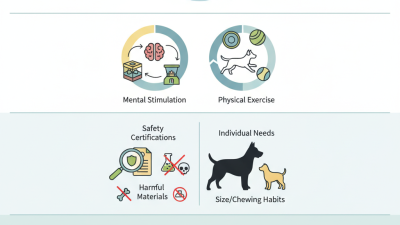
Choosing Quality Dog Toys in 2026 is less about colorful packaging and more about how a toy behaves in a real home. A rubber ball may bounce across the kitchen, while a plush toy’s seams meet sharp teeth within minutes. Size, materials, construction, and your dog’s play style all matter. Small details matter.
Veterinarian Dr. Marty Becker’s advice, paraphrased, is to choose toys that fit a dog’s size, chewing habits, and activity level. That is a useful starting point, not a guarantee. No toy is right for every dog, and “tough” on a label does not mean indestructible. Watch how your dog plays: Does she carry toys gently, shred fabric, or work patiently at a treat puzzle? Those habits can tell you more than a product photo.
This guide looks at the top Quality Dog Toys for 2026 through practical details: sturdy stitching, easy-to-clean surfaces, suitable sizing, and play that keeps dogs engaged. We’ll consider options for fetch, chewing, tugging, and quieter indoor activity. A toy should invite play without creating an avoidable hazard, so regular checks matter. Even a well-made toy can wear down. That part is easy to forget.
Table of Contents
[Hide]
Defining Quality in Dog Toys
Defining quality in dog toys starts with the dog, not the label. A small rubber ball may suit a gentle retriever but become a choking risk for a powerful chewer. Check that the toy is too large to swallow, has no loose parts, and fits the dog’s chewing style. Inspect seams and edges after play. Stop using it if pieces break away. Simple checks matter.
The American Pet Products Association’s 2025 State of the Industry report estimated U.S. pet spending at $152 billion in 2024. That figure covers the wider pet sector, not toy safety, but it shows why clear product information matters. Look for specific material descriptions and care instructions, not vague claims such as “indestructible.” No toy deserves that promise.
Quality also depends on how a toy behaves in daily use: does it stay intact, clean easily, and keep the dog interested without encouraging unsafe chewing? A textured surface can hold dirt in its grooves. A very hard toy may seem durable, yet durability alone is not a useful measure. I would not trust one checklist as a guarantee; dogs chew differently, and a toy that works today may wear down tomorrow. Regular inspection remains necessary.
What Are the Top Quality Dog Toys for 2026? - Defining Quality in Dog Toys
| Toy Type | Often Suited To | Quality Indicators | Key Limitations | Care and Safety Checks |
|---|---|---|---|---|
| Food-dispensing rubber toy | Dogs that enjoy licking, chewing, or working for food | Appropriately sized; resilient, non-splintering material; no loose parts; openings that are easy to inspect | Not every rubber toy is suitable for aggressive chewers; a toy that is too small can present a choking risk | Choose a size the dog cannot swallow. Remove it if cracked, torn, or missing pieces; clean food residue after use. |
| Durable chew toy | Dogs that prefer chewing rather than chasing or retrieving | Clearly stated size guidance; sturdy construction; no sharp edges or detachable components | No chew toy is indestructible. Very hard items may damage teeth, especially with forceful chewing. | Supervise chewing and check frequently for damage. Avoid items so hard that they do not yield under pressure from a fingernail. |
| Plush toy | Gentle play, carrying, or cuddling | Strong seams; secure, embroidered features; washable construction; minimal small decorative parts | Fabric and stuffing can be pulled apart by dogs that shred toys; exposed squeakers or stuffing may be swallowed. | Use under supervision if the dog tends to tear fabric. Discard once seams open or stuffing and components become accessible. |
| Rope toy | Interactive tug games with a person | Tightly secured knots; robust fibers; a size appropriate to the dog | Chewed or swallowed fibers can cause harm. Rope toys are not appropriate for every dog or for unsupervised chewing. | Use for supervised play, not as a chew item. Remove when frayed or unraveling, and clean and dry it regularly. |
| Fetch ball | Retrieving games in a suitable play area | Large enough not to be swallowed; easy to see; resilient material without cracks or sharp edges | A ball that is too small can lodge in the throat. Some materials can wear down with repeated chewing. | Match the ball to the dog’s size and retrieve style. Inspect for splits and replace if damaged; do not leave it for unsupervised chewing. |
| Food puzzle | Dogs that enjoy sniffing, nudging, or solving simple tasks | Stable construction; accessible compartments; pieces that stay attached during normal use; washable surfaces | Some puzzles can frustrate dogs or be dismantled by persistent chewers. They are not necessarily chew toys. | Introduce the puzzle gradually and supervise. Stop use if the dog bites off parts; clean according to the care instructions. |
| Floating water toy | Supervised water play for dogs comfortable in the water | Visible color; easy-to-grip shape; buoyant construction; size suitable for the dog | A toy does not replace close water supervision or a properly fitted life jacket where one is needed. | Use only in safe, supervised areas. Rinse and dry after use, and check for damage before the next play session. |
Quality rule of thumb: Select toys according to the dog’s size, chewing style, and play habits. Supervise play, inspect toys regularly, and remove any toy that is damaged or small enough to swallow.
Related Posts
-
10 Best Play On Dog Toys for Global Buyers?
-
Top Selling Pet Dog Toys in China for Global Buyers?
-
10 Best Good Quality Dog Toys for Wholesale Buyers?
-
How to Choose Good Quality Dog Toys for Your Pet?
-
2026 Best Active Dog Toys for Wholesale Buyers?
-
Unlocking Quality Suppliers for Best Play Dog Toys Proven Strategies for Global Buyers