
You have no items in your shopping cart.

10 Best Dog Items Every Pet Owner Needs
A dog’s day is shaped by ordinary moments: a leash clipped before sunrise, water beside the food bowl, and muddy paws waiting at the door. The right Dog Items can make these routines safer and easier, but a crowded shopping cart does not guarantee better care. Fit, durability, and your dog’s habits matter more than flashy features.
Veterinarian Dr. Marty Becker is known for promoting thoughtful, humane pet care. A practical paraphrase of his approach is: “Choose gear that supports your dog’s comfort, safety, and daily well-being.” That is a useful standard for this guide, not a verified direct quotation. A well-fitted harness, sturdy identification tag, washable bed, and appropriately sized bowls may serve different dogs in different ways. Check seams, clasps, materials, and cleaning instructions. For health-related products, ask your veterinarian rather than relying on packaging claims.
This list of 10 essentials focuses on items owners can assess in real life: how a harness sits during a walk, whether a bed stays dry, and if a travel bowl fits in a day bag. Some choices take trial and error. I have learned that the “perfect” item can still be wrong for one particular dog. Consider your pet’s size, age, coat, and routine before buying, and replace damaged gear promptly.
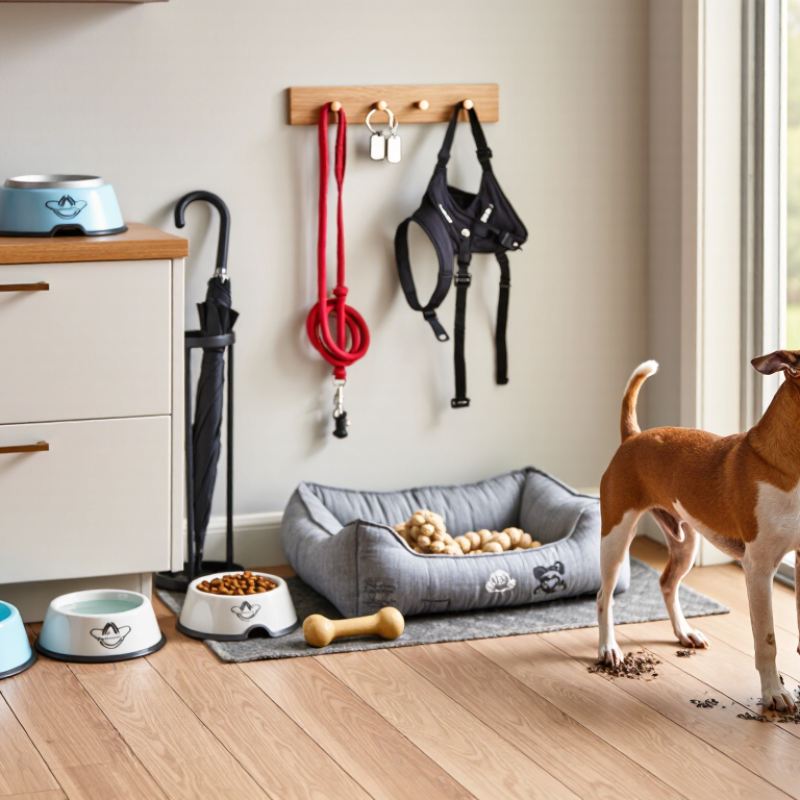
Table of Contents
[Hide]
Set Up Safe Walks with a Collar, ID Tag, and Leash
A safe walk starts with equipment that fits your dog, not just a matching set. Choose a flat collar that sits comfortably around the neck and does not slip over the head. You should be able to slide two fingers beneath it without forcing them. Fit matters. Check the buckle, stitching, and leash ring for wear before heading out. A loose collar can catch on things, while a tight one may rub skin or make breathing uncomfortable. Not too tight. If your dog coughs, pulls hard, or has a short muzzle, ask a veterinarian whether a well-fitted harness would be a better leash attachment.
Attach an ID tag securely to the collar, and make sure the phone number is current and easy to read. A tag can help someone contact you quickly if your dog slips away. It is easy to assume a familiar route is risk-free, but gates open and startled dogs can wriggle free. Use a leash with a strong clasp and a length you can manage; keep enough slack for sniffing without letting your dog reach traffic. Before each walk, give the clasp a quick tug and look for frayed areas. Small checks are easy to skip when you are in a hurry, and I sometimes have to remind myself that the few seconds matter.
10 Best Dog Items Every Pet Owner Needs — Set Up Safe Walks with a Collar, ID Tag, and Leash
| Item | Main Purpose | Useful Features | Practical Selection Tip |
|---|---|---|---|
| Adjustable Collar | Holds identification and provides a place to attach a leash when appropriate. | Secure buckle, adjustable fit, and a sturdy attachment ring. | Check the fit regularly; you should generally be able to slide two fingers between the collar and your dog’s neck. |
| ID Tag | Helps someone contact you if your dog gets lost. | Clearly engraved name and current phone number; securely fastened to the collar. | Keep the contact details readable and update them whenever your phone number changes. |
| Standard Leash | Provides control during walks and in public areas. | Strong clip, comfortable handle, and durable material. | A fixed leash around 4–6 feet long is a practical choice for everyday walks; follow local leash rules. |
| Well-Fitted Harness | Distributes leash pressure across the body rather than concentrating it on the neck. | Adjustable straps, secure closures, and a design that allows natural shoulder movement. | Check for rubbing and ensure your dog can move comfortably; fit varies with body shape. |
| Waste Bags | Make it easy to pick up and dispose of dog waste during outings. | Convenient dispenser and bags that are easy to open and tie. | Carry more than one bag on each walk and dispose of used bags in an appropriate bin. |
| Portable Water Bowl | Offers your dog water away from home. | Lightweight, easy to clean, and simple to fold or pack. | Bring fresh water on longer walks and in warm weather; offer breaks based on your dog’s needs. |
| Reflective Walking Gear | Improves visibility in dim light. | Reflective strips or high-visibility colors on a collar, harness, leash, or vest. | For nighttime walks, choose gear visible from multiple directions and stay on well-lit routes. |
| First-Aid Kit for Dogs | Provides basic supplies for minor incidents while you seek appropriate care. | Common supplies include gauze, bandage material, saline, and a tick-removal tool. | Ask a veterinarian what to include; do not give human medication unless a veterinarian directs you to. |
| Treat Pouch | Keeps rewards accessible for training and reinforcing calm walking behavior. | Easy-to-open closure, washable lining, and a clip or belt attachment. | Use small treats and account for them as part of your dog’s daily food intake. |
| Grooming Brush | Helps remove loose coat and supports routine coat care. | Brush style suited to coat length and texture; comfortable handle. | Brush gently and check your dog’s skin; ask a groomer or veterinarian for coat-specific advice. |
Safety reminder: Check collars, harnesses, and leash clips for wear before walks. Make sure identification details are current, and choose equipment that fits your dog comfortably.
Related Posts
-
How to Choose the Best Dog Toys for Your Pet's Happiness and Health
-
How to Choose Good Quality Dog Toys for Your Pet?
-
How to Choose Good Quality Dog Toys for Happy Healthy Pets?
-
China Top 10 Dog Products Manufacturers for Global Buyers
-
How to Choose the Best Active Dog Toys for Your Dog?
-

The Future of Essential Innovations in Dog Products