
You have no items in your shopping cart.

Bird Control Spikes offer a practical way to discourage birds from perching on narrow ledges, signs, roof edges, and beams. Their closely spaced projections make landing uncomfortable while leaving birds free to move away. When selected and installed correctly, they can help protect building surfaces from droppings and nesting debris without trapping the birds. The idea is simple. A row of spikes can be less intrusive than repeated cleaning or covering an entire structure.
The right choice depends on the site. Stainless steel and UV-resistant plastic options suit different weather conditions, surfaces, and budgets. Before installation, inspect the area: note where birds land, how wide the ledge is, and whether gaps could offer an easy perch. A poorly fitted strip may simply shift the problem a few inches. That happens.
Bird Control Spikes also need occasional attention. Leaves, twigs, and dust can collect between the projections, so routine checks help keep the deterrent effective. They are not a universal fix, and heavy bird activity may call for a broader site assessment. Consider the building’s appearance, cleaning access, and the birds’ behavior before choosing a product. Even a well-made spike system can disappoint if the underlying attractants remain. That detail is easy to miss. Done thoughtfully, spikes can be a durable, low-profile part of a responsible bird-management plan.
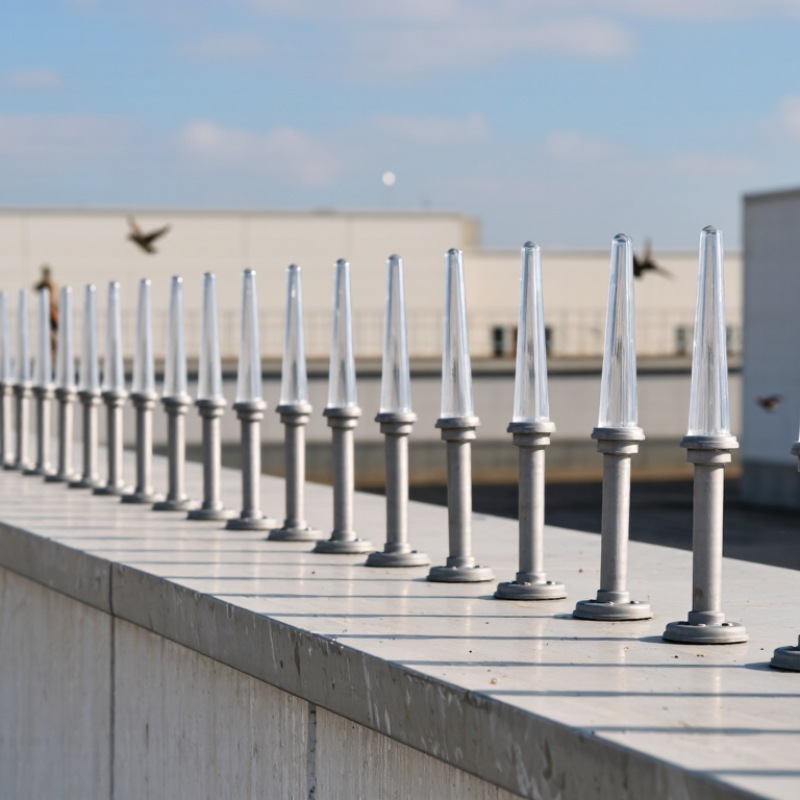
Bird control spikes are strips fitted with rows of narrow pins, usually made from metal or durable plastic. They sit on ledges, roof edges, signs, and other places where birds often perch. The pins reduce the flat space available for landing, making the surface less inviting without blocking the area entirely. They are a deterrent, not a barrier that keeps every bird away.
Placement matters. A strip should cover the usual landing zone, with gaps and corners checked carefully; even a small uncovered section can become a new perch. Before installation, clean the surface and choose fixings suited to its material and exposure to weather. Keep drainage paths clear. Check the spikes now and then for loose sections, debris, or damage.
Not a magic fix. Bird behavior varies, and spikes may work less well when food or shelter is nearby. They also need to be installed thoughtfully, so they do not create hazards for people or wildlife. I’ve found the overlooked detail is often the ledge just beside the treated area. A quick site check can reveal it.
Bird spikes are designed to discourage birds from landing, not to remove them from an area entirely. They are commonly used against pigeons, starlings, and gulls, which often perch on narrow ledges and roof edges. Larger birds, such as crows, may also avoid a properly covered perch. Small birds can sometimes find gaps between spike rows, especially where the surface is wide or the layout is interrupted.
That detail matters.
Spikes are a poor substitute for closing an access point where birds are nesting or sheltering.
They work best on stable surfaces such as masonry ledges, parapets, sign tops, and roof beams. A clean, dry surface helps adhesive-mounted strips stay in place; screws or other suitable fixings may be preferable where wind or weather puts the installation under stress. Curved pipes and uneven stonework need careful fitting, since exposed gaps can become new perches. Keep drainage paths clear, and avoid placing spikes where they could snag people or interfere with maintenance. Not every surface suits them. Even a neat installation may need adjustment after rain, debris buildup, or repeated bird activity.
Birds often return to familiar ledges, signs, and roof edges, leaving droppings and nesting material behind. Bird control spikes make these narrow landing spots less comfortable without enclosing the area. Their slim profile can preserve airflow and sightlines, which matters around shopfronts, balconies, and building signs. The goal is deterrence, not injury.
A practical benefit is targeted coverage. Spikes can be fitted along a parapet, window sill, or beam where birds repeatedly settle. Choose a design suited to the surface and local weather, then secure it with compatible fixings. A poorly attached strip may shift in wind or leave gaps; placement matters as much as the product. Keep drainage channels clear.
Maintenance is usually straightforward. Check for loose sections, trapped leaves, and accumulated nesting material during routine building inspections. Still, spikes are not a universal fix. They may not address birds using nearby roof spaces or sheltered cavities, and some ledges need a different approach. That distinction matters. Before installation, observe where birds land and how they approach the site. The pattern is not always obvious, and an initial layout may need adjustment.
Why Choose Bird Control Spikes?
How to Select Spikes for Different Locations
The right spike depends on the surface, target bird, and exposure to weather. On narrow window ledges, choose a low-profile strip that fits without covering drainage slots. For broad roof edges, wider coverage can reduce gaps where birds may perch. Measure the usable surface, not just its outer edge. Small detail. The U.S. Federal Aviation Administration’s 2022 wildlife strike report recorded about 17,200 reported strikes involving civil aircraft; birds accounted for roughly 97 percent. This is not a building-specific measure, but it shows why thoughtful bird management matters.
Match the spike spacing and height to the birds commonly using the site. Small perching birds may slip through gaps designed for larger species. On exposed rooftops, corrosion-resistant materials and secure fixings matter; on sheltered signs, appearance and easy cleaning may matter more. Check that spikes do not obstruct water flow or routine access. Drainage matters. A tidy-looking installation can still leave an open landing spot at a corner, and that detail is easy to miss. Inspect the area after installation, especially around joints, pipes, and ledge ends. Conditions change, so the first layout may need adjustment. FAA, Wildlife Strikes to Civil Aircraft in the United States, 2022.
| Location | Typical Issue | Spike Selection Considerations | Placement Guidance | Important Caution |
|---|---|---|---|---|
| Window sills and narrow ledges | Birds perch or roost on the ledge, leaving droppings and debris. | Choose a low-profile strip suited to the ledge width. Flexible, cut-to-length bases can help follow small changes in surface shape. | Cover the usable perching area and secure the strip to a clean, sound surface. | Keep spikes clear of window operation, access routes, and surfaces that need regular maintenance. |
| Building parapets and broad ledges | Frequent perching or roosting along an extended horizontal surface. | Select a wider coverage pattern where the ledge is broad; use multiple rows only when the surface width and site conditions require them. | Measure the full ledge and plan continuous coverage, including ends and gaps where birds could perch. | Check that installation will not damage waterproofing, flashing, or other roof-edge materials. |
| Signs, beams, and architectural projections | Birds perch on exposed upper edges, braces, or sheltered undersides. | Choose a base and attachment method compatible with the material and shape. Narrow strips may suit slim edges; wider surfaces may need broader coverage. | Inspect all likely landing surfaces, not just the most visible edge, and avoid obstructing sign faces or service access. | Follow applicable electrical and sign-maintenance safety procedures when working near illuminated signs or elevated structures. |
| Roof ridges and roof-mounted structures | Birds land on ridge caps or around vents and other rooftop features. | Use a configuration suited to the roof profile and exposure. A secure, weather-resistant attachment is important in outdoor conditions. | Fit only where the strip can be attached without interfering with roofing components, vents, or equipment. | Do not block ventilation openings, roof drainage, or access needed for inspection and repair. |
| Pipes, narrow rails, and small beams | Birds perch on slim, elevated surfaces. | Consider a narrow strip or a purpose-designed fitting that matches the surface width and shape. | Ensure the strip is stable and does not create a snagging hazard for people or maintenance workers. | Do not install on moving equipment or where spikes could interfere with cables, conduits, or routine servicing. |
| Gutters and drainage channels | Bird activity occurs close to roof edges or drainage areas. | Spikes are generally not the first choice inside gutters because they can collect debris and obstruct water flow. | Consider a deterrent designed for the specific roof-edge location, installed without narrowing or covering the water path. | Keep gutters, outlets, and downspouts clear so rainwater can drain freely. |
Selection tip: Match the spike coverage to the surface width, exposure, and attachment surface. Before installation, check local wildlife rules and confirm that no active nest or dependent young will be disturbed.
Bird control spikes can discourage perching when they form a continuous, correctly fitted barrier. Choose a design with smooth, rounded tips, and match its width to the ledge or beam. Clean the surface before installation, then secure the base without covering drains or creating gaps where birds could become trapped. Check the site for nesting activity and non-target wildlife before work begins. If you find either, pause and consult a qualified wildlife professional. A tidy fit matters.
Maintenance is practical, not optional. Inspect after storms and during seasonal cleaning for loose sections, droppings, leaves, and nests caught in debris. Clear blockages carefully, and replace damaged parts; gaps can invite perching again. Humane use means excluding birds from a specific landing spot, not injuring them or blocking access to food and water.
The conservation context deserves care: Rosenberg et al. estimated that North America had lost nearly three billion birds since 1970 in their 2019 Science study. Loss et al.’s 2013 study in Nature Communications estimated that free-ranging cats kill 1.3–4.0 billion birds annually in the United States.
These figures do not measure the effect of spikes. They do remind us to choose low-risk deterrents and inspect them honestly. A quick visual check can miss a snagged feather or a loose base.