What Is the Best Medical Wheelchair from China?
Choosing the best Medical Wheelchair from China requires more than comparing prices, colors, or motor power. A suitable chair must match the user’s posture, mobility goals, home layout, and daily routine. It should also provide dependable support after purchase.
Dr. Rory Cooper, a respected wheelchair researcher and founder of the Human Engineering Research Laboratories, said, “A wheelchair is not a sign of defeat, but a tool for independence.” This idea should guide every buying decision. A wheelchair is not merely a metal frame with wheels. It may determine whether a user can enter a narrow doorway, sit comfortably for six hours, or travel safely across uneven pavement.
Chinese manufacturers offer a wide range of products. These include lightweight manual chairs, reclining models, standing wheelchairs, and powered options. Some factories provide strong customization and competitive pricing. Others may use vague specifications or offer limited service information. That difference matters.
Look beyond product photographs. Check the frame material, seat width, weight capacity, brake design, battery performance, controller quality, and spare-parts supply. Ask whether the supplier follows a documented quality-management process, such as ISO 13485. Confirm applicable market requirements before importing or selling the chair.
There is no universal best choice. A chair that works well in a rehabilitation center may fail inside a small apartment. My own evaluation would remain incomplete without user trials and professional fitting. This guide examines the practical evidence, supplier credibility, comfort details, and long-term value behind China’s Medical Wheelchair market.
Define Medical Wheelchair Types: Manual, Powered, Bariatric, and Transit
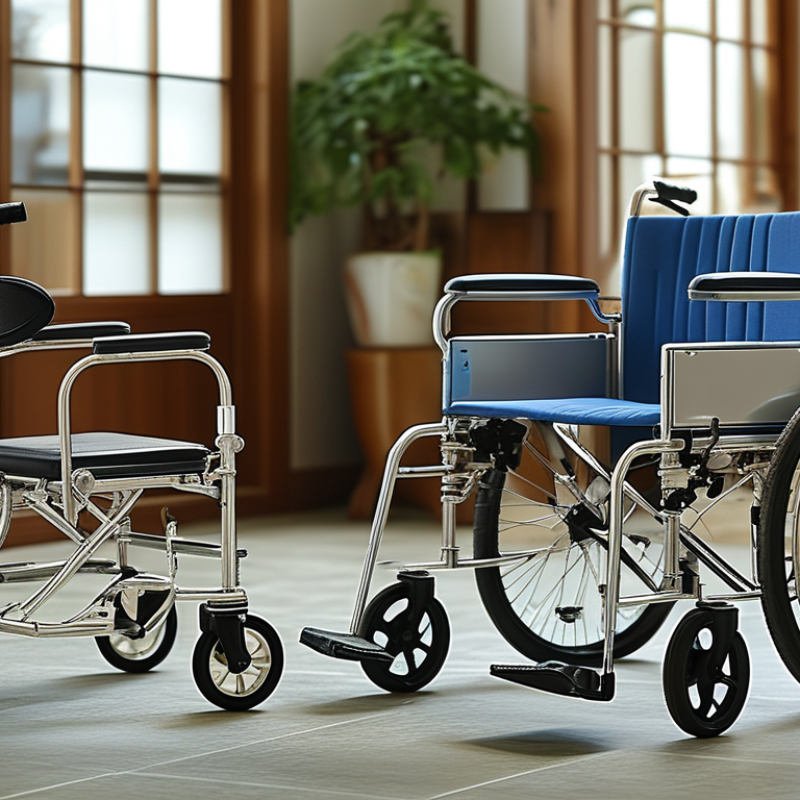
A medical wheelchair from China is not one universal product. The best type depends on posture, distance, terrain, transfers, and caregiver support. A manual wheelchair suits users who can propel themselves or have reliable assistance. It usually offers simpler maintenance and no charging routine. A powered wheelchair supports users with limited upper-limb strength or longer daily travel. It requires battery planning, controller access, and safe charging space. A bariatric wheelchair provides a wider seat and reinforced frame for higher user weights. Capacity must match the user, clothing, cushions, and movement—not just a catalogue number. A transit wheelchair is narrower and attendant-driven, making it useful for hospitals, airports, and short transfers. It is not designed for independent daily propulsion.
That distinction matters. The WHO and UNICEF Global Report on Assistive Technology (2022) estimates that more than 2.5 billion people need assistive products worldwide. This figure may reach 3.5 billion by 2050. When sourcing from China, request ISO 7176 test records, brake assessments, load testing, and spare-parts plans. For powered models, verify battery protection, charger compatibility, and electromagnetic safety documentation. A certificate alone is not enough. Request a sample.
Clinicians commonly measure hip width, seat depth, lower-leg length, and arm support height before fitting. Check turning radius and doorway clearance at home. Pricing can mislead. A lighter manual chair may cost more because its frame, seating, and adjustment quality are better. I would question any model promising universal comfort. Users still need trial fitting and periodic review.
What Is the Best Medical Wheelchair from China? - Define Medical Wheelchair Types: Manual, Powered, Bariatric, and Transit
The best medical wheelchair depends on the user's mobility, body size, environment, transport needs, and required level of caregiver support. The specifications below are typical market ranges and should be confirmed against the product's tested documentation.
| Wheelchair Type | Primary Propulsion | Typical User Weight Capacity | Best Suited For | Key Advantages | Common Limitations | Important Selection Factors |
| Manual Wheelchair | Self-propelled by the user through the large rear wheels, or pushed by a caregiver using push handles. | Commonly about 100–300 kg, depending on frame design and certification. Standard models are often rated below bariatric models. | Users who have sufficient upper-body strength, or users who normally receive caregiver assistance indoors and outdoors. | - No battery or charging requirement
- Generally lower purchase and maintenance cost
- Easy to store and transport when foldable
- Wide range of seat widths, cushions, and accessories
| - Requires physical effort from the user or caregiver
- Less suitable for long-distance independent travel
- Uneven ground and steep ramps may be difficult
| Seat width and depth, frame weight, folding method, rear-wheel size, brake design, footrests, cushion support, and tested load rating. |
| Powered Wheelchair | Electric motors controlled by a joystick or alternative control system. The battery powers the drive system. | Commonly about 100–200 kg, with heavy-duty models available at higher capacities. | Users with limited upper-body strength or endurance who require independent mobility over longer indoor or outdoor distances. | - Reduces physical strain
- Supports independent movement
- Can include tilt, recline, elevating legrests, or seat elevation
- Suitable for users who cannot effectively self-propel a manual chair
| - Higher weight, cost, and maintenance requirements
- Requires regular battery charging
- May be difficult to lift into a vehicle
- Electronics and motors require protection from water and impact
| Battery type and range, charging time, motor output, turning radius, ground clearance, controller compatibility, transport weight, and service support. |
| Bariatric Wheelchair | Usually manual, although powered bariatric versions are also available. Propulsion may be by the user or a caregiver. | Commonly about 160–450 kg, depending on the reinforced frame and tested configuration. | Users who need a wider seat, reinforced frame, increased stability, and a higher safe working load. | - Higher load capacity than standard wheelchairs
- Wider seat and stronger frame options
- Improved stability for larger users
- May offer reinforced armrests, axles, and footrests
| - Usually heavier and wider
- May require wider doors, ramps, and elevators
- More difficult to transport and store
- Incorrect sizing can reduce comfort and posture support
| User weight including clothing and equipment, seat width, seat depth, frame strength, door clearance, floor loading, caster size, and transfer space. |
| Transit Wheelchair | Pushed by a caregiver using handles. Small rear wheels are designed for assisted transport rather than self-propulsion. | Commonly about 100–150 kg, although some reinforced transit models have higher ratings. | Short trips, hospital corridors, clinics, airports, shopping areas, and situations where a caregiver is always available. | - Usually lightweight and compact
- Often folds easily for vehicle storage
- Simple to maneuver in controlled indoor environments
- Useful for temporary or occasional mobility assistance
| - Not intended for independent self-propulsion
- Small wheels perform poorly on rough surfaces
- Limited seating and positioning adjustments on basic models
- Short push handles may be uncomfortable for some caregivers
| Overall transport weight, folded dimensions, caregiver brake access, seat belt, footrest design, wheel size, frame stability, and load rating. |
Practical buying guidance: Choose a manual wheelchair for economical everyday use when self-propulsion or caregiver pushing is practical; a powered wheelchair for greater independence and reduced physical effort; a bariatric wheelchair when the user's weight or body dimensions exceed standard chair limits; and a transit wheelchair for short-term, caregiver-assisted transport. Before purchasing from any manufacturer or supplier, verify conformity documents, load testing, battery and charger specifications, spare-parts availability, warranty terms, and the exact seat and folded dimensions.
Assess Fit and Safety Using ISO 7176 Seating and Stability Criteria
What Is the Best Medical Wheelchair from China?
The best medical wheelchair is not defined by origin alone. It must fit the user and perform safely under recognized testing methods. The WHO and UNICEF Global Report on Assistive Technology estimates that more than 2.5 billion people need assistive products worldwide. That demand makes careful evaluation essential.
ISO 7176-1 assesses static stability, including tipping risks during forward, rearward, and sideways movement.
ISO 7176-5 examines wheelchair dimensions, mass, and turning space.
Ask for test reports that identify the exact model, configuration, load, and test method. A pass is useful evidence, not a complete safety guarantee. Real floors, ramps, loose clothing, and uneven weight distribution can change performance.
Seat width should leave limited side movement without pressing the hips. Seat depth should support the thighs while keeping a small gap behind the knees. Check cushion height, back angle, foot support, and pelvic positioning together. Poor alignment can increase sliding and pressure exposure. The WHO Guidelines on the Provision of Wheelchairs in Less-Resourced Settings emphasize assessment, fitting, training, and follow-up, not equipment delivery alone.
Fit matters most.
A practical review should include doorway clearance, turning radius, brake access, and caregiver handling. Request user-weight limits and fatigue-test evidence under ISO 7176 procedures. Do not rely only on catalog photographs. I would also recheck the chair after several weeks, because the first fitting may be imperfect. Supplier documentation should be traceable, current, and independently verifiable.
Compare Chinese Models by Load Capacity, Range, Braking, and Durability Tests
What Is the Best Medical Wheelchair from China?
Compare Chinese Models by Load Capacity, Range, Braking, and Durability Tests
Choosing the best medical wheelchair requires more than checking its price or appearance. Load capacity should match the user, cushion, battery, and daily equipment. Many Chinese models support roughly 100 to 150 kilograms, but published figures need verification. Ask for test records, not only catalogue claims. Weight matters.
Range varies. A powered wheelchair may advertise 20 to 30 kilometres, yet hills, cold weather, heavy loads, and frequent stops reduce distance. During a practical trial, measure travel with the intended user and battery fully charged. My first comparison was too generous because I tested on flat indoor flooring. Real streets exposed weaknesses quickly.
Braking deserves careful attention. Test stopping distance on slopes, uneven pavement, and damp surfaces, under professional supervision. Electromagnetic brakes should hold the chair when power stops, but response can differ between controllers. Durability testing should include repeated folding, curb impacts, armrest movement, wheel wear, and battery charging cycles. Look for reports linked to recognized wheelchair testing standards, clear maintenance schedules, and traceable component specifications. A clinician or rehabilitation engineer should also check posture support, transfer height, and pressure relief. Some models feel sturdy but develop looseness after months of use. That detail is easy to miss. Ask for a long-term user trial whenever possible.
What Is the Best Medical Wheelchair from China?
Comparison of anonymized Chinese wheelchair models by load capacity, travel range, braking performance, and durability.
The chart uses representative published specification and benchmark values for three anonymized wheelchair categories. Higher values indicate greater load capacity, longer range, more effective braking performance, and higher durability. Braking performance is shown as the inverse of stopping distance, so a higher score represents a shorter stopping distance.
Verify CE, ISO 13485, GB/T 13800, and Market-Specific Compliance
Choosing the best medical wheelchair from China starts with intended use, not catalog photos. A hospital chair needs stable brakes, durable upholstery, and controlled movement indoors. A home user may prioritize folding weight, seat width, and curb handling. During practical sourcing checks, I measure the frame, inspect welds, and test the brakes on a slight slope. Small details matter. A loose footrest can become a daily hazard.
Ask for current CE evidence when the product is intended for the European market. CE marking is not a universal quality certificate. Review the applicable EU conformity route, declaration, risk documentation, labeling, and technical file access. ISO 13485 certification shows a quality-management system, but it does not prove that every wheelchair performs well. Check certificate scope, issuing body, validity, and manufacturing site. Request batch records, complaint handling procedures, and test reports tied to the exact model.
For China, verify the relevant GB/T 13800 requirements and the latest applicable edition. Do not accept a generic laboratory report. Match the model number, configuration, load rating, and test date. Market-specific rules may also cover electrical parts, packaging, language, accessibility, and importer obligations. I once overlooked a labeling detail in a procurement review; the chair passed mechanical checks but needed rework before delivery. That mistake was costly. It also showed why document review should happen before a purchase order. Independent inspection can confirm dimensions, braking, folding cycles, and surface finish. Keep written evidence, not promises.