
What Are the Top Types of Industrial Vacuum Cleaners?

An Industrial Vacuum Cleaner is more than a stronger version of a household machine. In a factory, the right system can capture fine dust at a cutting head, collect metal shavings beside a lathe, or recover liquid from a washdown area. The wrong choice can leave residue in corners or clog during a shift. Small details matter.

The U.S. Occupational Safety and Health Administration estimated that about 2.3 million workers were exposed to respirable crystalline silica when it issued its 2016 silica rule. In that announcement, OSHA Assistant Secretary Dr. David Michaels said, “For the first time, we are providing comprehensive protections from silica exposure to workers in construction, general industry, and maritime.” The statement underscores why dust type and filtration deserve careful attention. A vacuum is one part of a control plan, not a substitute for evaluating workplace hazards.

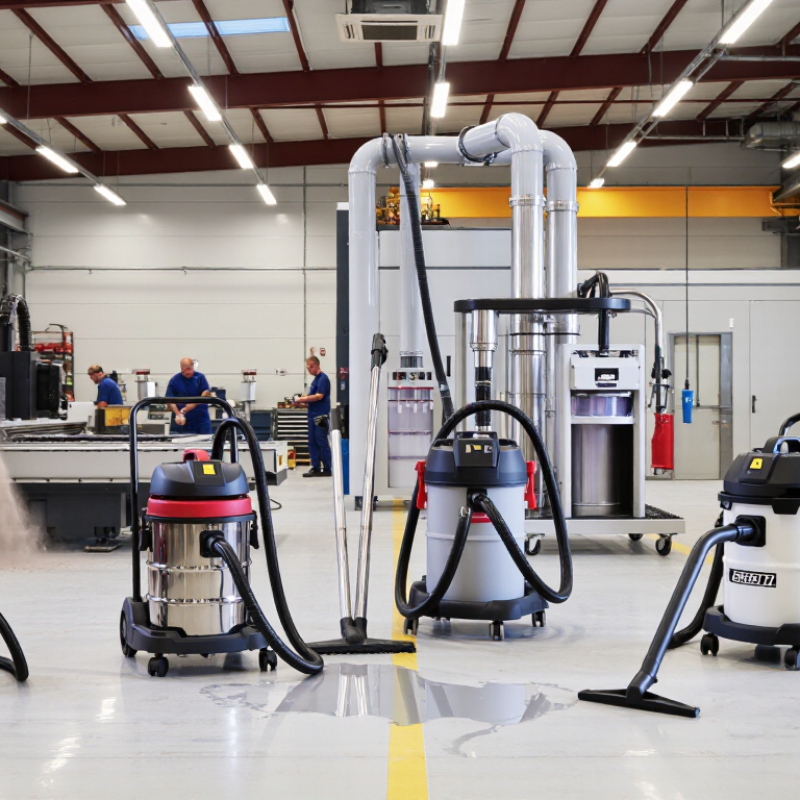
This guide compares common industrial vacuum types: dry, wet/dry, HEPA-filtered, central, and explosion-protected models. Each suits different debris, duty cycles, and collection needs. A compact wet/dry unit may handle spills and chips, while a fixed central system can serve several workstations. HEPA filtration can be relevant when fine particles require high-efficiency capture, but the full setup matters. Filter condition, airflow, hose size, and disposal practices all affect performance. There is no universal winner. Even product labels can be confusing, so buyers should verify specifications against the actual material and task.
What Are the Top Types of Industrial Vacuum Cleaners?

How Industrial Vacuum Cleaners Are Classified

What Are the Top Types of Industrial Vacuum Cleaners?

How Industrial Vacuum Cleaners Are Classified

Industrial vacuum cleaners are best classified by the material they collect, their filtration level, and their power source—not by appearance alone. Dry units handle powder and debris; wet-dry models collect liquids and solids, often using a float shutoff to protect the motor. Central systems serve fixed production lines, while portable units move between workstations. Small details matter. A fine powder can pass through a filter designed for coarse chips.

Filtration classes help match equipment to dust risk. IEC 60335-2-69 defines dust classes L, M, and H, with progressively stricter filtration requirements. Selection should reflect the material, exposure assessment, and filter-cleaning needs; a class label alone does not replace site-specific evaluation. For example, a woodworking area may need a different setup from a process handling very fine or hazardous dust. These categories can overlap, which is useful but easy to misread.

Power source adds another distinction: electric models suit fixed access to outlets, while compressed-air units may fit locations where electrical equipment is unsuitable. Market context shows why the choices matter: Grand View Research valued the global industrial vacuum cleaner market at USD 1.75 billion in 2022 and forecast 5.5% annual growth from 2023 to 2030. That forecast describes market demand, not performance. Check airflow, filter compatibility, bin capacity, and maintenance access against the actual task. The perfect classification is rarely obvious at first.

Dry Industrial Vacuum Cleaners for Fine Dust and Debris

What Are the Top Types of Industrial Vacuum Cleaners?

Dry Industrial Vacuum Cleaners for Fine Dust and Debris

Dry industrial vacuum cleaners are designed to collect dry material such as sanding dust, wood chips, and production debris. For fine dust, the filter matters as much as suction power. A suitable filtration system helps capture small particles and reduces the amount that returns to the workspace. Check the equipment’s stated filtration rating and the dust types it is designed to handle. Fine dust behaves differently.

In workshops, a narrow floor nozzle can reach along machine bases, while a crevice tool helps clean seams and corners. The hose should suit the material being collected; bulky debris may need a wider opening to avoid clogs. A common oversight is focusing only on motor power. If the filter loads quickly, airflow can drop, even when the machine still sounds strong. That matters.

Filter cleaning and emptying routines affect day-to-day performance. Follow the unit’s instructions, and avoid shaking dusty filters in occupied areas. Some models use sealed collection systems or automatic filter-cleaning features, but these details do not replace checking compatibility with the dust. There is no perfect setup. Match capacity, filtration, and attachments to the task, then review how the machine performs during a normal shift. A little trial and adjustment may be needed.

What Are the Top Types of Industrial Vacuum Cleaners? — Dry Industrial Vacuum Cleaners for Fine Dust and Debris

Type Typical collection and filtration setup Common applications Key advantages Important considerations
General-purpose dry industrial vacuum Dry collection bin or bag with a cartridge or fabric filter. Routine cleanup of chips, coarse dust, and general workplace debris. Versatile for everyday housekeeping and a range of dry materials. Check that the filter and collection arrangement suit the dust’s particle size and volume.
Fine-dust cartridge-filter vacuum Pleated cartridge filter with a large surface area; some models include manual or automatic filter cleaning. Fine powders and process dust from activities such as sanding, grinding, or material handling. Designed to retain fine particles while supporting sustained airflow when maintained properly. Filter media and cleaning method should match the dust. Very fine dust can load filters quickly if the setup is unsuitable.
HEPA-filtered dry vacuum High-efficiency particulate air filtration, often used as a final filter stage after a primary filter. Fine particulate cleanup where high-efficiency filtration is required, subject to workplace requirements. Can provide high-efficiency particle capture when the filter and complete vacuum system are appropriately tested and maintained. A HEPA filter alone does not make a vacuum suitable for every hazardous dust. Confirm applicable regulations, containment, and filter-change procedures.
Continuous-duty industrial vacuum Heavy-duty motor and collection system intended for extended or frequent operation; filtration varies by application. Ongoing cleanup around production equipment or repeated collection during a shift. Built for demanding operating schedules and frequent material collection. Confirm the unit’s duty rating, cooling requirements, dust capacity, and maintenance needs with the equipment specifications.
Centralized industrial vacuum system A fixed vacuum source connected to one or more work areas by a pipe network, with central collection and filtration. Facilities needing vacuum points at multiple production or cleanup locations. Reduces the need to move portable units between connected work areas. Pipe layout, airflow balance, material transport, and filter sizing require system-level design.
Vacuum with a pre-separator A separator or collection container positioned ahead of the main vacuum filter to capture much of the incoming material. High-volume dry debris or dust loads that could fill the main collection container quickly. Can reduce the amount of material reaching the primary filter and make bulk collection easier. Separator performance depends on the material and system design; fine particles may still require suitable final filtration.
Engineered combustible-dust vacuum system System selected and configured for the specific combustible dust and applicable safety requirements. Collection of combustible powders or dusts in workplaces where a documented dust hazard assessment requires specialized controls. Can incorporate design features selected to address ignition and dust-related risks. Do not assume a standard industrial vacuum is suitable. Equipment selection, grounding, accessories, and operating procedures must follow the relevant assessment and regulations.

Selection tip: Match the vacuum to the dust’s properties, the amount generated, required filtration, operating duration, and applicable safety rules. For hazardous or combustible dust, consult a qualified safety professional and verify that the complete system—not just its filter—is suitable.

Wet and Dry Vacuums for Liquids and Solids

Industrial wet-and-dry vacuum cleaners collect loose solids and liquids, often in the same maintenance area. They can handle sawdust, small metal shavings, grit, and routine spills when fitted for the material. That versatility helps. A sturdy tank and suitable hose make everyday cleanup easier, but filtration determines what the machine can safely capture. For liquid recovery, use a model and filter setup approved for wet pickup; dry-only media may clog or become damaged. A float shutoff can limit overfilling, though it should never replace checking the tank. Water can hide in floor joints.

Selection starts with the mess, not just tank size. Estimate the usual liquid and debris load per shift. Then check hose diameter, filter access, and where the tank will be emptied. Fine dust needs filtration matched to its particle size; ordinary shop filters may not be enough. For repeated liquid pickup, tank capacity and drain design affect downtime. A common planning mistake is choosing the largest tank without checking its weight when full. Check it often. Empty and clean the unit according to its manual, especially after sticky or dirty liquids. No single setup handles every material equally well.

Hazardous-Dust Vacuums for Combustible or Toxic Materials

Hazardous-Dust Vacuums for Combustible or Toxic Materials

Combustible and toxic dusts need more than strong suction. The vacuum must match the material, particle size, and collection conditions. For combustible dust, select equipment designed and approved for the specific hazard, with suitable electrical components and conductive, grounded accessories where required. For toxic fine particles, a sealed system and correctly specified high-efficiency filtration help limit dust escaping during use and filter changes. A HEPA label alone is not enough.

The risk is not merely theoretical. The U.S. Chemical Safety Board’s 2006 Combustible Dust Hazard Study examined 281 incidents from 1980 to 2005, reporting 119 deaths and 718 injuries. These historical figures are not a current annual rate, but they show why dust control deserves careful attention. Small details matter.

Match the vacuum’s dust classification and filtration to a documented hazard assessment; do not assume one unit suits every powder. Check seals, hoses, grounding, and collection containers before each shift. Keep maintenance procedures clear, especially for filter changes and disposal. A practical blind spot is treating suction performance as proof of safety. It is not. Equipment specifications can look tidy on paper, while dust behavior in a real process is less tidy. Use qualified safety personnel to verify the setup and operating procedure.

Centralized Vacuum Systems for Large Facilities

Centralized Vacuum Systems for Large Facilities

A centralized vacuum system serves multiple work areas from one fixed power unit. Overhead or wall-mounted pipework carries dust to a collection point, reducing the need to move portable machines between shifts. It suits facilities with repeated cleanup routes, such as production halls with floor pits, cutting stations, and long aisles. The layout matters: undersized pipes or too many open inlets can weaken suction where operators need it.

Design starts with the material, not just floor area. Engineers should assess dust characteristics, airflow demand, filter loading, and collection-bin capacity. OSHA’s 2016 respirable crystalline silica rule analysis projected that the rule would prevent more than 600 deaths and 900 new silicosis cases annually. Those estimates concern the rule as a whole, not vacuum systems alone. Still, they underline why source capture and suitable filtration deserve careful attention.

Keep the system accessible. A blocked branch or full bin can quietly reduce performance. Not glamorous, but important. Routine checks should include pressure readings, filter condition, and leaks at hose connections. Central systems can also create trade-offs: long pipe runs may complicate balancing, and a single unit can become a facility-wide bottleneck. A site survey and airflow testing help verify performance after installation; drawings alone are not enough.