What Are the Top Kids Bed Types for Global Buyers?
Global buyers are rethinking the Kids Bed as both a sleep product and a compact furniture solution. Smaller homes, shared bedrooms, and flexible family spaces are influencing purchasing decisions. Grand View Research identifies continued growth in children’s furniture, while Statista reports strong online demand for bedroom products across major markets. These signals matter, but they do not tell the whole story.
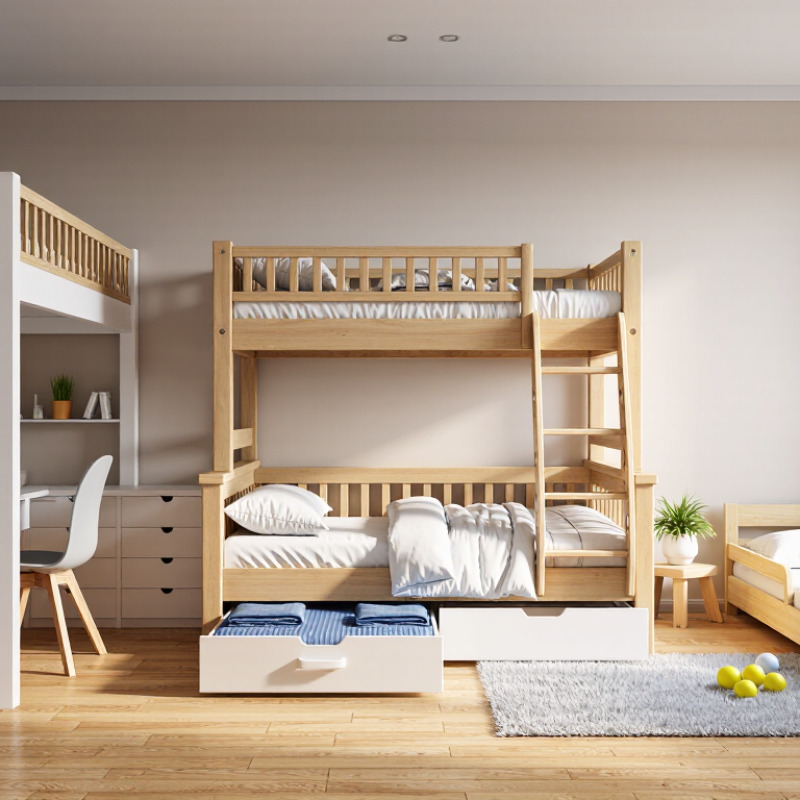
Bunk beds remain popular where floor space is limited. Loft beds create room for desks, drawers, or play areas underneath. Trundle beds support visiting siblings, while low Montessori-style beds appeal to parents seeking easier access for younger children. Platform beds offer simple assembly and a clean silhouette. Practicality often wins.
Safety must lead every comparison. Dr. Rachel Y. Moon, a pediatric sleep expert and former chair of the American Academy of Pediatrics’ safe-sleep task force, states, “The safest place for an infant to sleep is on a separate, flat, and firm sleep surface.” Her guidance is essential, although infant products and older children’s beds should not be treated as identical categories. That distinction is sometimes missed.
Global buyers should examine guardrail height, ladder grip, mattress compatibility, rounded edges, ventilation, load capacity, and replacement-part access. ASTM International standards and U.S. Consumer Product Safety Commission guidance provide useful reference points, but local requirements may differ. Materials also deserve scrutiny. Low-VOC finishes, certified wood, and durable hardware can reduce concerns during long-term use.
The best Kids Bed is not always the most fashionable one. It is the design that fits the room, age, routine, budget, and safety expectations. Even this framework needs reflection: online ratings can hide assembly problems, and “space-saving” designs may create daily inconvenience.
What Defines a Kids Bed and Why Type Matters
What Are the Top Kids Bed Types for Global Buyers?
A kids bed is more than a smaller adult bed. It combines child-sized access, stable construction, safe edges, and age-appropriate sleeping height. The main types include platform beds, bunk beds, loft beds, trundle beds, and low floor beds. Each type changes how children climb, move, store items, and share space. Appearance is not enough.
Type matters because sleep and safety needs develop together. The American Academy of Sleep Medicine recommends 9–12 hours of sleep for children aged 6–12. A low platform bed supports easier access for younger children. A bunk or loft bed saves floor space, but requires stronger guardrails and safer ladder design. ASTM F1427 and EN 747 provide useful safety references for these structures. Local requirements can still differ.
Grand View Research estimated the global children’s furniture market at approximately 36 billion U.S. dollars in 2023. Its classification includes several product categories, so bed figures are not isolated. This limitation deserves attention. Different reports define “kids furniture” differently. Buyers should compare dimensions, materials, load limits, ventilation, and cleaning details instead of trusting market labels. In practical inspections, sharp corners and unstable ladder joints often matter more than decorative themes. A beautiful bed can still be poorly matched to a child’s age.
What Are the Top Kids Bed Types for Global Buyers?
A kids bed is a sleep product designed around a child's size, age, mobility, and safety needs. Bed type matters because sleeping height, fall risk, access, and space requirements change as children grow.
The chart shows widely used minimum-age safety thresholds in months. Toddler beds are covered by U.S. product-safety rules for children from 15 months, while upper bunk and loft sleeping surfaces are generally not recommended for children under six years old. Local regulations and professional guidance may vary by market.
How Platform Beds Support Simple, Safe Sleeping Spaces
Platform beds are becoming a practical choice for global buyers seeking simple, safe sleeping spaces. Their low profile can reduce the distance of a nighttime fall. That detail matters.
The American Academy of Pediatrics’ 2022 safe-sleep guidance recommends a firm, flat, non-inclined surface with a fitted sheet only. A well-built platform bed can support that setup when its slats keep the mattress level and stable. However, the frame itself does not guarantee safety.
Buyers should check the mattress-to-frame fit, slat spacing, load capacity, and rounded edges. Keep it low. Avoid decorative gaps where small fingers can become trapped.
U.S. Consumer Product Safety Commission nursery-product surveillance reports continue to identify falls, entrapment, and structural failures as recurring injury concerns. This makes quality control important for manufacturers and importers.
Look for clear assembly instructions, tested materials, durable fasteners, and documentation linked to the destination market’s requirements. Standards differ across regions, so one certificate may not prove global compliance.
I would not treat a clean product photo as evidence. A few practical checks matter more: press the joints, inspect the corners, and confirm that the mattress cannot shift during use. Some platform designs also include drawers or raised sections, but extra storage can create climbing risks. Simpler is often safer, though not always.
Why Bunk Beds Suit Shared Rooms and Space-Saving Needs
What Are the Top Kids Bed Types for Global Buyers?
Bunk beds suit shared rooms because they use vertical space instead of consuming another floor area. This matters as housing becomes more crowded.
UN-Habitat’s World Cities Report 2022 estimates that 1.6 billion people live in inadequate housing worldwide. For families, a 90-by-200-centimeter bunk footprint can leave space for desks, storage, or safer walking paths.
The lower bunk supports younger children, while the upper bunk serves an older child. Yet age guidance must control the design choice. The U.S. Consumer Product Safety Commission advises that children under six should not use the upper bunk. Its safety materials also report about 36,000 bunk-bed-related injuries treated in emergency departments annually.
Guardrails should run continuously along the exposed side. Ladders need wide, secure steps and firm attachment points. Small gaps deserve attention.
Material quality matters too. Solid wood can feel stable, but poorly finished edges may cause cuts. Metal frames can be strong, yet loose joints may create noise and movement.
Buyers should check weight ratings, mattress thickness limits, assembly instructions, and replacement-part availability. Bunk beds are practical, not automatically perfect.
They can feel cramped, and changing sheets on the upper level is inconvenient. A better design may include drawers, removable ladders, or a convertible frame. The room should fit the bed, not the other way around.
How to Compare Safety, Materials, Sizes, and Global Standards
For global buyers, the safest kids’ bed type depends on age, room size, and supervision. Toddler beds suit younger children because their low height reduces climbing distance. Bunk and loft beds save floor space, but they require stricter guardrail and ladder checks. The U.S. Consumer Product Safety Commission reports about 36,000 bunk-bed injuries annually, mostly involving children. That figure deserves attention, not panic.
Compare products against recognized requirements, not attractive photographs. In the United States, check applicable CPSC rules, including 16 CFR Part 1213 for bunk beds. European buyers can review EN 747 requirements for high and bunk beds. Australia and New Zealand use AS/NZS 4220. These standards address guardrails, openings, stability, and entrapment risks. Mattress fit matters too. A gap beside the frame can trap a small arm or head. Measure the mattress and internal frame before ordering.
Materials need equal scrutiny. Solid timber may offer strong joints, while engineered panels need reliable edge sealing and low-emission documentation. Ask for test reports covering structural strength, coating safety, and formaldehyde emissions. The World Health Organization identifies falls as a major source of childhood injury, so sharp corners and unstable ladders should not be treated as minor details. I would not assume “natural” means safer. Labels can be incomplete. A responsible comparison also checks replacement parts, assembly instructions, and local compliance after import.