
You have no items in your shopping cart.

Choosing a Heated Base Layer manufacturer is not just a search for warmth. Buyers need products suited to their climate, use case, and price range. A warehouse worker may need steady warmth through long shifts, while a winter commuter may value light fabric and easy layering. Fit matters. This guide examines ten manufacturers through practical buyer questions, including heating zones, battery placement, fabric construction, sizing options, and care instructions. It also considers production capacity, customization, sample access, and communication. Details matter. A low unit price can lose its appeal if lead times shift or replacement parts prove difficult to source.
The manufacturers in this guide offer different strengths, so the right choice depends on your customers and sales channel. Some buyers may prioritize private-label options; others may need dependable repeat orders or clear product documentation. Ask for current specifications, sample garments, battery details, and written care guidance before committing to a large order. A polished catalog is useful, but it cannot show how a garment feels after several hours of wear. Not always. Product claims and available options can also vary by model, so verify them directly with each supplier. This comparison is a starting point, not a substitute for testing. A few details may be easy to overlook, especially when sourcing across markets. Those details can matter most once products reach customers.
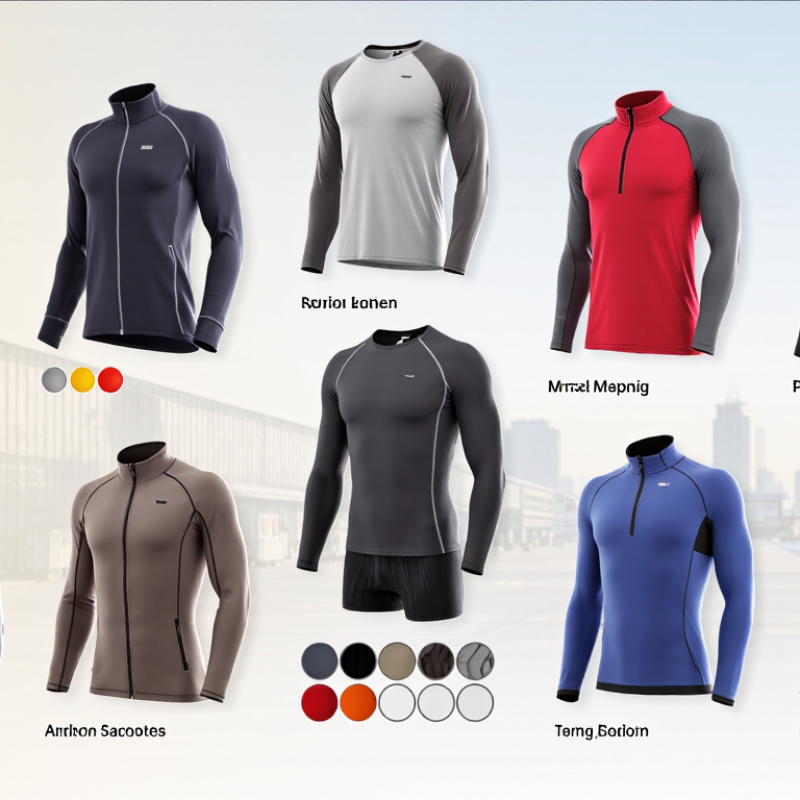
Heated base layers are close-fitting garments designed to add warmth beneath everyday clothing or outdoor gear. Unlike ordinary thermal underwear, they contain thin heating elements, often placed across the chest or upper back. These panels warm areas where extra heat can feel useful without adding bulky insulation. Fit matters.
Power usually comes from a rechargeable battery connected to the garment by a small cable. A button or controller lets the wearer select a heat setting. On low, the layer may provide steady warmth during a chilly commute; on high, it can feel more noticeable while standing outdoors. Battery life varies with the setting, battery capacity, outside temperature, and garment design. Check the maker’s care instructions, since washing methods differ.
The heating system works best as part of a sensible clothing setup, not as a substitute for a windproof outer layer. A snug base layer helps keep the heating panels close to the body, while breathable fabric can reduce dampness during movement. The warmth may feel uneven, especially if a panel sits away from the skin or clothing bunches beneath a jacket. That is easy to overlook. Buyers should consider panel placement, controls, battery access, and how the garment feels when sitting or reaching. Heated clothing can help in cold conditions, but comfort and performance still depend on the person and the weather.
When comparing heated base layer manufacturers, start with the garment itself, not the highest temperature setting. Check fiber content, fabric weight, stretch, and fit against the intended activity. A close fit helps transfer warmth, but tight cuffs or seams can become irritating under a jacket. Fit matters, too. Ask whether sizing has been tested across different body shapes, not just one sample size.
Compare heating zones and control options in practical terms. A chest-only layout may suit steady outdoor work, while back and abdomen zones can help during cold, low-movement tasks. Request battery capacity, charging time, and runtime at each heat setting. Runtime figures are difficult to compare unless test temperatures and conditions are disclosed. I would treat an unqualified “all-day” claim cautiously; wind, layering, and battery age change the result. Small details matter.
Check how manufacturers handle washing, connector protection, and replacement batteries. Look for clear care instructions and test reports that identify the garment size, battery, and measurement method. Ask about seam construction and fabric performance after repeated washing, since a soft sample can feel different after regular use. If specifications are missing, record that gap rather than assuming two products are equivalent. A brief wear test with a mid-layer can reveal pressure points that a product sheet cannot.
When comparing heated base layer manufacturers, look beyond catalog photos and advertised temperature claims. Ask how heating elements are positioned across the torso, how wiring is protected from bending, and whether controls remain reachable under an outer layer. Request a sample and inspect the seams, fabric recovery, and cable exits after several wear-and-wash cycles. A smooth first try-on can hide pressure points that appear after an hour. That matters.
Reliable manufacturers should explain their testing in plain language. Ask for documented checks covering heat distribution, temperature control, battery compatibility, and repeated laundering. Confirm the reports match the exact fabric and construction you plan to order. Clarify who sources batteries, how rejected units are handled, and how production changes are recorded. Compare sample performance with a small pilot run; results can differ. Even experienced buyers sometimes overlook this gap.
Tips: Test samples on different body shapes and over a full workday. Record hot spots, bunching, and control access. Ask for realistic lead times, not just the most optimistic estimate.
For buyers comparing heated base layer manufacturers, the sample matters more than a polished catalog. Ask for fabric composition, heating-zone maps, wash-test results, and battery runtime at stated temperatures. Textile Exchange’s Materials Market Report 2024 estimates global fiber production reached 124 million tonnes in 2023, with polyester making up a large share. That scale makes fiber traceability worth checking. Ask suppliers to document recycled-content claims and explain how heating elements are secured inside the fabric. Small details matter.
Test samples against the conditions customers will actually face: a cold start, repeated bending at the elbows, and several wash cycles. Request temperature readings across different zones, not just one point near the heating element. The Outdoor Industry Association’s 2024 participation report counted 175.8 million U.S. participants in outdoor recreation in 2023, a broad audience with varied layering needs. Buyers should compare size grading, minimum order quantities, repair support, and delivery consistency alongside warmth. Ask for written test methods. A runtime figure without its test conditions is difficult to compare. One caveat: a sample can perform well and still fail in bulk production, so verify quality controls before placing a large order.
A buyer-focused look at common nominal power-system voltages used in heated apparel—not a manufacturer ranking.
USB supplies are typically rated at 5 V. Lithium-ion cells are commonly rated at 3.6–3.7 V nominal, making two-cell and three-cell packs approximately 7.4 V and 11.1 V, respectively. Check each product’s specifications for its actual battery and compatibility.
Before comparing heated base layer manufacturers, define the conditions the garment must handle. Ask which heating zones are included and whether each zone has separate settings. Request the fabric composition, size chart, and sample measurements. A warm sample helps. But one fitting cannot confirm how the garment performs across a full size run.
Confirm battery capacity, charging time, and expected runtime at each heat setting. Ask how runtime was tested; indoor results may not match a cold outdoor workday. Request relevant safety and quality test reports, plus clear care instructions. Check whether the garment can be machine-washed with the battery removed. Small details matter. Inspect seams, cable placement, and pocket access on a physical sample, not only in product photos.
Before placing an order, confirm the minimum order quantity, production lead time, sample fees, and packaging details in writing. Agree on inspection criteria, such as heating consistency and stitching defects, before production starts. Ask how the supplier handles failed units and delayed shipments. I would not assume a quoted delivery date is guaranteed; production schedules can shift. A signed specification sheet gives both sides a useful reference when the first shipment arrives.
| No. | Capability to Evaluate | What to Request from the Manufacturer | What to Confirm Before Ordering |
|---|---|---|---|
| 1 | Heating zones and element construction | A heating-zone diagram, element material and construction details, rated voltage, and available garment configurations. | Confirm the exact heated areas, element placement, connector design, and approved garment specification in the purchase order. Request sample testing for comfort, heat distribution, and durability. |
| 2 | Electrical ratings and compatibility | The garment’s rated voltage and power requirements, plus the specified compatible battery or power source. | Check that the garment, battery, wiring, and controller are designed to work together. Record the approved electrical specifications and supplied accessories in writing. |
| 3 | Runtime and heat settings | Runtime test results for each heat setting, including battery capacity, ambient conditions, test method, and whether testing used a new or aged battery. | Compare products only using the same test conditions. Put the agreed test method and any minimum runtime requirement in the order specification; runtime varies with battery, setting, and conditions. |
| 4 | Battery transport and safety documents | For lithium batteries, request applicable test documentation, such as a UN 38.3 test summary. Ask for additional battery safety documentation required by the destination market. | Verify that documents match the exact battery model being supplied. Confirm shipping, labeling, and destination-market requirements with the manufacturer and freight provider. |
| 5 | Temperature and electrical protections | Details of any over-current, short-circuit, over-temperature, or automatic shutoff protections, along with relevant test records. | Confirm which protections are included in the final product and how they were tested. Do not treat a feature as present unless it is documented for the ordered model. |
| 6 | Fabric, fit, and size grading | Fabric composition, weight, stretch or fit details, size chart, measurement tolerances, and a pre-production sample in the intended materials. | Approve the size chart, labeling, color, and material before bulk production. Check fit and movement on representative wearers and retain an approved reference sample. |
| 7 | Washability and care instructions | Written care instructions and test evidence for the finished garment, including the battery removal procedure and any limits on washing or drying. | Confirm that the care label matches the tested product. Agree on a wash-test method and number of cycles if wash durability is a purchase requirement; do not assume all heated garments are machine washable. |
| 8 | Market-specific compliance | A list of applicable product and electrical requirements for the intended sales markets, plus reports or certificates for the exact product where required. | Check requirements by product configuration and destination country. Confirm that the documents identify the correct model and components; a general factory certificate is not product certification. |
| 9 | Quality control and traceability | The inspection process, defect classification, production-lot traceability method, and proposed pre-shipment inspection criteria. | Agree on measurable acceptance criteria, inspection timing, sampling approach, and remedies for nonconforming goods before production begins. |
| 10 | Commercial terms and production capacity | A written quotation covering MOQ, sample and tooling costs, unit pricing, lead time, packaging, payment terms, and agreed delivery terms. | Confirm which items are included in the price, when the production lead time starts, how changes affect cost and schedule, and the inspection and approval milestones. |
Standards and documentation requirements can vary by battery chemistry, product design, and destination market. Buyers should verify applicable requirements with qualified testing, compliance, and shipping professionals before placing an order.