
You have no items in your shopping cart.

What Are the Top Arc Floor Lamps to Buy?
A curved lamp can change a room without moving a single chair. Arc Floor Lamps reach over sofas and tables, placing light where ceiling fixtures may miss. Their sweeping stems also make them visually prominent. The right choice needs more than a striking silhouette. Buyers should compare reach, base stability, shade direction, bulb type, and dimming controls.
The U.S. Department of Energy reports that LED bulbs use at least 75% less energy and can last up to 25 times longer than incandescent bulbs. These figures offer useful context, though actual performance depends on the bulb and use. The ENERGY STAR program also provides lighting guidance for efficiency and product selection. Randall Whitehead, a lighting designer and author, has described lighting as “the jewelry of the home.” It is a memorable comparison. Yet even beautiful jewelry can feel misplaced. A heavy marble base, for example, may suit a broad living room but crowd a narrow apartment.
This guide compares leading Arc Floor Lamps through practical details, not appearance alone. We consider how far each arm reaches, how firmly its base sits, and whether its light feels comfortable beside a reading chair. Some trade-offs are easy to miss. A dramatic curve can obstruct a walkway, while a compact shade may leave a larger seating area dim. There is no perfect lamp for every room. Measurements, ceiling height, and daily habits matter. We’ll help you find the options worth considering—and the compromises to notice before buying.
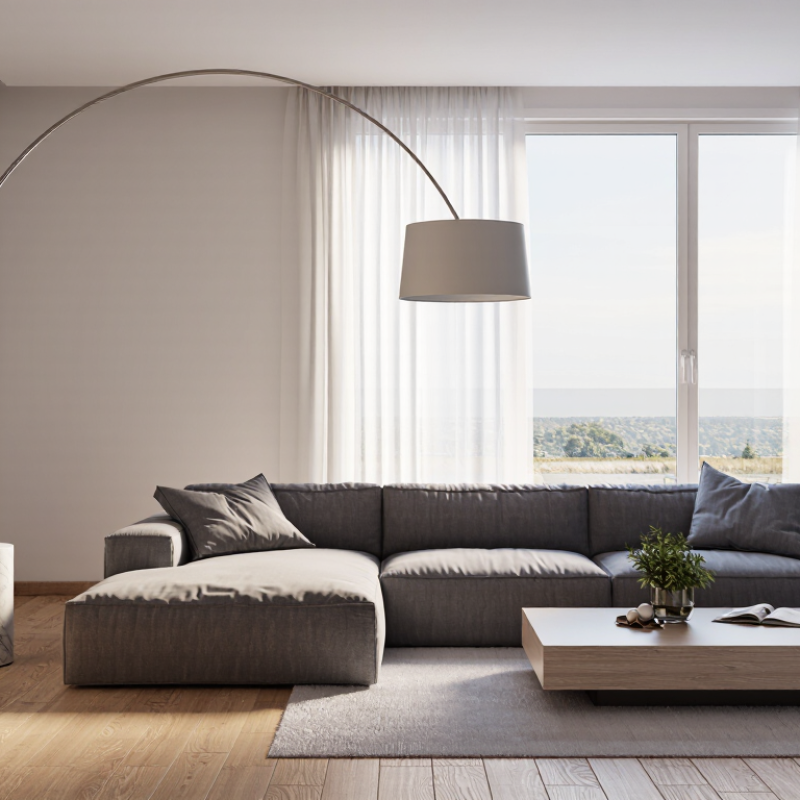
Table of Contents [Hide]
How Arc Floor Lamps Differ from Other Floor Lamps
What Are the Top Arc Floor Lamps to Buy?
How Arc Floor Lamps Differ from Other Floor Lamps
Arc floor lamps have a curved arm that carries the shade over a sofa, chair, or table. Unlike straight floor lamps, they can place light above a seating area without needing a side table nearby. Their base usually sits behind or beside the furniture, while the shade reaches inward. This makes them useful where ceiling lights feel too harsh or a table lamp would take up valuable space.
Other floor lamps often send light upward or illuminate the area directly beside them. An arc lamp can focus light on a book or conversation area, depending on its shade and bulb. Check the lamp’s reach, base weight, and available floor space before choosing one. A wide base may feel awkward in a small room, and a long arm can look out of balance beneath a low ceiling. That trade-off is easy to underestimate.
Tips: Measure from the planned base position to the spot you want lit. Make sure the shade clears people’s heads and doors. Choose a dimmable bulb if you want both reading light and softer evening illumination. Arc lamps are not always the neatest fit, but careful placement can make their reach practical.
| Rank | Lamp Type | Typical Design and Dimensions | Light Direction and Use | Main Advantages | Things to Consider |
|---|---|---|---|---|---|
| 1 | Adjustable Arc Floor Lamp | A curved arm extends from a weighted base; some models let the arm or shade pivot. Overall height and reach vary by design. | Places a shade over a sofa, chair, or table without requiring a ceiling fixture directly above it. | Flexible positioning; useful for reading or providing focused light over a seating area. | Check the arm’s reach, shade clearance, and base stability. The extended arm needs open space. |
| 2 | Wide-Reach Arc Floor Lamp | Features a longer curved arm and a broad base, often designed to extend farther into a room. | Can illuminate a larger seating arrangement or a dining table from the side. | Provides overhead-style lighting without a permanent ceiling installation. | Requires more floor space and a stable position; measure the intended span before buying. |
| 3 | Compact Arc Floor Lamp | A shorter or more tightly curved arm gives it a smaller reach than a wide-span design. | Works beside a single armchair or in a smaller living room where a full-size arc may feel intrusive. | Offers the curved-arm look while taking up less visual space. | Its shade may not reach far enough to center over a large sofa or table. |
| 4 | Multi-Light Arc Floor Lamp | Uses two or more shades or light heads on one curved structure. | Can spread light across a wider area or direct separate heads toward different spots. | Provides broader or more adaptable illumination than a single-head arc lamp. | Consider the combined brightness, shade directions, and footprint; multiple heads do not guarantee even room lighting. |
| 5 | Traditional Straight-Pole Floor Lamp | A vertical pole holds a shade near the top, usually with a relatively small footprint. | Typically sits beside a chair or sofa and directs light from its position rather than reaching over furniture. | Simple to place in corners or beside seating; generally easier to fit into tight spaces. | Usually cannot position its shade over the center of a table or sofa unless placed very close. |
| 6 | Torchiere Floor Lamp | A tall, straight lamp with an upward-facing bowl or shade. | Directs light toward the ceiling, where it reflects back into the room as broad, indirect illumination. | Useful for ambient lighting without a large projecting arm. | Less suited to focused reading light; the result depends on the ceiling and room surfaces. |
| 7 | Task Floor Lamp | Usually has a narrow profile and an adjustable arm or head designed for targeted lighting. | Directs light onto a book, desk, or craft area from nearby. | Good for close-up activities and precise light placement. | Its focused beam may not illuminate a broad seating area as evenly as an arc or ambient lamp. |
| 8 | Tripod Floor Lamp | A shade is supported by three legs, creating a wider base than many straight-pole lamps. | Usually provides ambient light from beside furniture rather than extending over it. | Offers a distinctive, stable three-leg base and can suit open corners. | The legs need clear floor space and may be awkward near walkways or furniture. |
Buying tip: Arc lamps differ from most floor lamps because their curved arms let the shade project over furniture from a base set to the side. Dimensions, adjustability, bulb compatibility, and brightness vary by model, so check the product specifications and measure the space before purchasing.