China Top 10 Toys Storage Boxes Suppliers?
Choosing reliable Toys Storage Boxes suppliers in China requires more than comparing catalog photos and quoted prices. This guide introduces ten notable suppliers for buyers seeking practical storage solutions, including stackable bins, fabric organizers, wooden chests, and modular shelves. The selection considers manufacturing experience, material quality, production capacity, customization options, and export service. It also looks at details that matter in daily use, such as smooth edges, reinforced handles, secure lids, and easy-clean surfaces.
Real sourcing work is rarely perfect. A supplier may offer attractive samples but struggle with consistent color matching during mass production. Another may provide fast communication yet have limited packaging experience. These differences deserve careful checking. Buyers should request product samples, factory videos, test reports, packaging drawings, and clear production timelines. Where relevant, documentation for toy-contact safety, chemical limits, and children’s product requirements should be verified with qualified testing agencies. Prices alone can mislead.
This overview is designed to support informed supplier research, not to declare a permanent ranking. Market conditions change, and a strong supplier for one retailer may not fit another. Order quantity, target market, storage design, and shipping method all influence the final decision. Small details matter. A box that looks attractive online may feel unstable on a nursery floor. Careful communication, written specifications, and pre-shipment inspection can reduce avoidable risks. The following profiles offer a practical starting point for comparing China’s leading Toys Storage Boxes manufacturers and exporters.
What Defines a Leading Toy Storage Box Supplier in China
A leading toy storage box supplier in China is defined by more than factory size or a polished catalog. In practice, buyers need consistent materials, accurate dimensions, and dependable delivery. Experienced suppliers can explain how polypropylene, fabric, wood, or recycled materials perform in homes, classrooms, and retail settings. They should provide samples before mass production. Small details matter. Hinges should move smoothly. Fabric seams should resist pulling. Lids should not collapse under light pressure. These checks reveal practical knowledge that marketing photos cannot show.
Professional suppliers maintain documented quality controls from incoming material checks to final packing. They test sharp edges, pinch points, odor, load limits, and surface durability for the intended age group. They also understand applicable product safety requirements in target markets and can provide clear test reports from qualified laboratories. Reliable communication is equally important. A capable team confirms carton dimensions, color references, labeling, and shipment schedules in writing. When a problem appears, they explain its cause instead of hiding behind vague promises.
Customization can show a supplier’s engineering strength. Good teams adjust molds, ventilation openings, handles, and stackability without weakening the box. Yet flexibility has limits. A low-cost change may reduce durability or increase packing damage. Buyers should question those trade-offs. No supplier is flawless. Even strong factories may miss a color variation or underestimate peak-season delays. The difference lies in corrective action, traceable records, and honest follow-up after delivery. Visit audits, sample approvals, and repeat inspections make trust measurable.
China’s Top 10 Toy Storage Box Suppliers
China’s top 10 toy storage box suppliers stand out through practical design, stable production, and export experience. These manufacturers commonly offer fabric bins, plastic containers, wooden chests, and foldable organizers. Each type serves a different room and buying budget. Some focus on custom printing, while others provide stronger structures for nurseries and classrooms.
A reliable supplier should show clear material details, factory photos, and recent inspection records. During sourcing checks, I look closely at stitching, hinges, handles, and lid alignment. Small faults often appear after repeated opening. Ask for samples before placing a large order. Compare odor, edge finishing, load capacity, and carton protection. A supplier with flexible minimum order quantities can also support smaller retailers. That matters.
The leading ten suppliers usually support custom sizes, color matching, packaging changes, and logo placement. Experienced teams should explain production times without vague promises. They should also provide suitable safety documentation for the destination market. However, not every attractive catalog reflects consistent quality. A brightly printed box may still collapse under heavy toys. This is easy to miss. Buyers should request batch photos and repeat testing before approval. Honest communication about defects is valuable, even when it slows the project. Supplier rankings can change as equipment, staff, and material sources change. Check again.
Product Types, Materials, and Customization Options
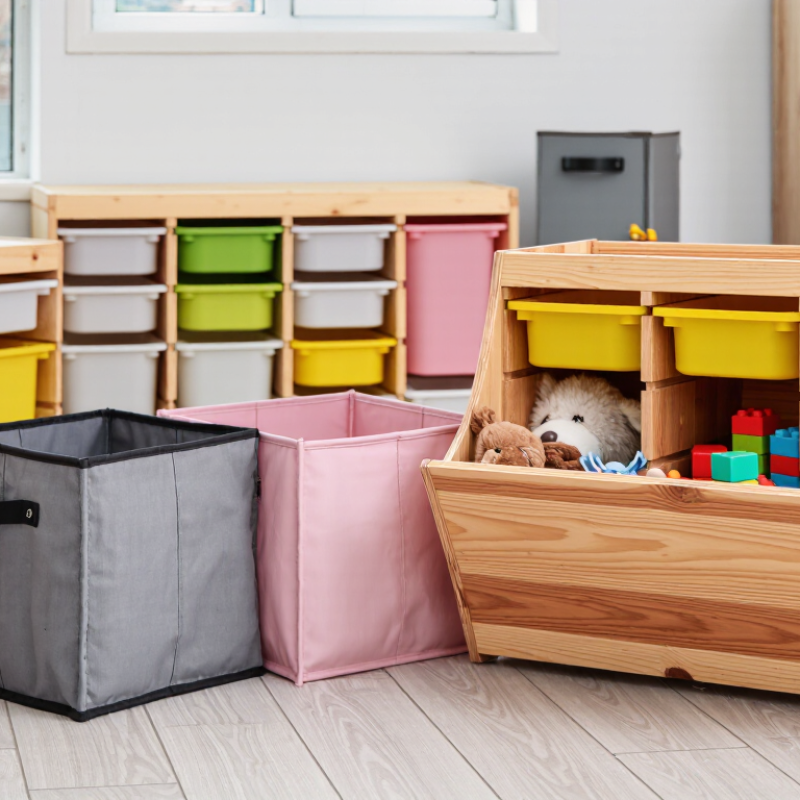
China’s top ten toy storage box suppliers often serve different buying needs, from nursery organizers to retail bins. Product types include foldable fabric cubes, stackable plastic boxes, wooden chests, rolling carts, and wall-mounted pockets. Buyers should compare dimensions, load limits, lid hinges, handles, and cleaning methods. A 30-liter cube may hold soft toys, while a shallow tray keeps puzzles visible. Small details matter.
Materials influence safety, durability, and cost. Cotton canvas feels warm but can absorb spills. Polyester fabric resists moisture and folds easily. PP plastic is lightweight, washable, and suitable for transparent panels. Solid wood offers stability, but it needs smooth edges and a properly tested finish. Check odor, seam strength, ventilation, and rounded corners through samples, not photographs. Some specifications look impressive but perform poorly after repeated use.
Customization may cover colors, patterns, custom sizes, compartments, lids, packaging, and instruction sheets. Ask for material certificates, inspection records, production samples, and a clear defect policy. For export orders, confirm carton compression, moisture protection, and actual measurements. Practical testing often reveals a weak handle or loose seam. Request pull testing and repeated-use testing. The first sample is rarely perfect. Leave room for revision.
China Top 10 Toys Storage Boxes Suppliers: Product Types, Materials, and Customization Options
The chart compares representative material density values used in common toy storage box formats. Lower-density materials generally support lighter and easier-to-ship products, while higher-density materials can provide greater rigidity or structural strength. Actual finished-box weight depends on thickness, hardware, lining, and construction.
Common customization options include printed patterns, custom colors, private labels, embroidered or woven logos, reinforced handles, foldable structures, compartment layouts, lid designs, and custom dimensions.
How to Compare Prices, Quality, and Production Capacity
China Top 10 Toys Storage Boxes Suppliers: How to Compare Prices, Quality, and Production Capacity
Price should begin with landed cost, not the factory quotation. A 2024 Mordor Intelligence estimate values the global plastic storage container market at about US$7.8 billion. It also forecasts annual growth above 5% through 2029. This growth attracts more suppliers, but low prices can hide thinner walls, higher defect rates, or expensive packaging. Request prices for identical dimensions, materials, lids, colors, carton quantities, and shipping terms. Compare the complete cost.
Quality needs measurable evidence. Ask for material specifications, load testing, drop-test results, and sample approval records. For children’s products, check relevant requirements such as EN 71, ASTM F963, and chemical testing rules in the target market. SGS and Intertek industry guidance both emphasize traceability and batch-based inspection. Inspect hinge alignment, rounded edges, odor, and lid strength. Small details matter.
Production capacity is harder to verify. A supplier may advertise 100,000 units monthly, while actual output depends on molds, shifts, and other orders. Ask for machine lists, recent production records, peak-season capacity, and average lead times. Request a live video audit or independent factory inspection. A useful comparison records monthly output, rejection rates, minimum order quantity, and recovery plans. Reports can be imperfect. Supplier data can be imperfect too. That is why a small pilot order often reveals more than a polished presentation.
Key Steps for Verifying and Choosing a Supplier
Choosing among China’s top toy storage box suppliers requires more than comparing prices. Start by checking the supplier’s business license, factory address, production scope, and export history. Request recent factory photos or arrange a video inspection. The warehouse should show organized materials, labeled cartons, and clear quality procedures. Ask for safety test reports covering plastic, fabric, paint, and small parts. Old documents are not enough. Verify the report number with the testing laboratory when possible.
Request a production sample before discussing large orders. Inspect the hinges, handles, stitching, seams, and folding edges. Place books or toys inside the box and test its stability on a flat floor. Check whether the lid closes smoothly after repeated use. Small details matter. A strong-looking box may still smell sharply or collapse under light pressure. I once focused too heavily on appearance and overlooked carton strength. That mistake increased shipping damage.
Compare minimum order quantities, lead times, packaging methods, and payment terms in writing. Ask how the supplier handles defective units and replacement parts. A reliable supplier should provide a clear inspection standard, not only verbal promises. Request references from recent international buyers, but contact them independently. Communication is another practical test. Send the same five questions and compare response speed, accuracy, and willingness to admit limitations. Delayed replies are not always serious, yet vague answers deserve caution. Keep approved samples, inspection photos, test records, and signed specifications together. This evidence supports consistent purchasing when production changes.