
You have no items in your shopping cart.

10 Tips for Sourcing Quality Products for Pets
Sourcing quality Products For Pets requires more than attractive packaging and a competitive price. Buyers must examine materials, safety records, supplier communication, and real customer feedback. A soft harness may look excellent online, yet its stitching can loosen after several walks. A chew toy may feel durable, but its seams deserve closer inspection. Small details matter.
Roger Caras, former ASPCA president and longtime animal advocate, said, “Dogs are not our whole life, but they make our lives whole.” His words remind suppliers that pet products serve living companions, not passing trends. Quality decisions should consider comfort, durability, hygiene, and the daily routines of pets and owners. Ask where materials come from. Request test reports. Check whether product claims match evidence.
Experience also teaches caution. A reliable supplier may still make an occasional mistake. No checklist is perfect. That is why product samples, follow-up inspections, and honest reviews remain valuable. Buyers should compare return rates, packaging quality, and response times before placing large orders. They should also consider different breeds, sizes, ages, and sensitivities. A heavy metal bowl may suit one household but frustrate a small dog. A powerful toy may overwhelm a senior cat.
The following ten tips explain how to evaluate suppliers and select safer, more dependable Products For Pets. They focus on practical checks, responsible sourcing, and evidence-based decisions. Some advice may seem obvious. It is still easy to overlook.
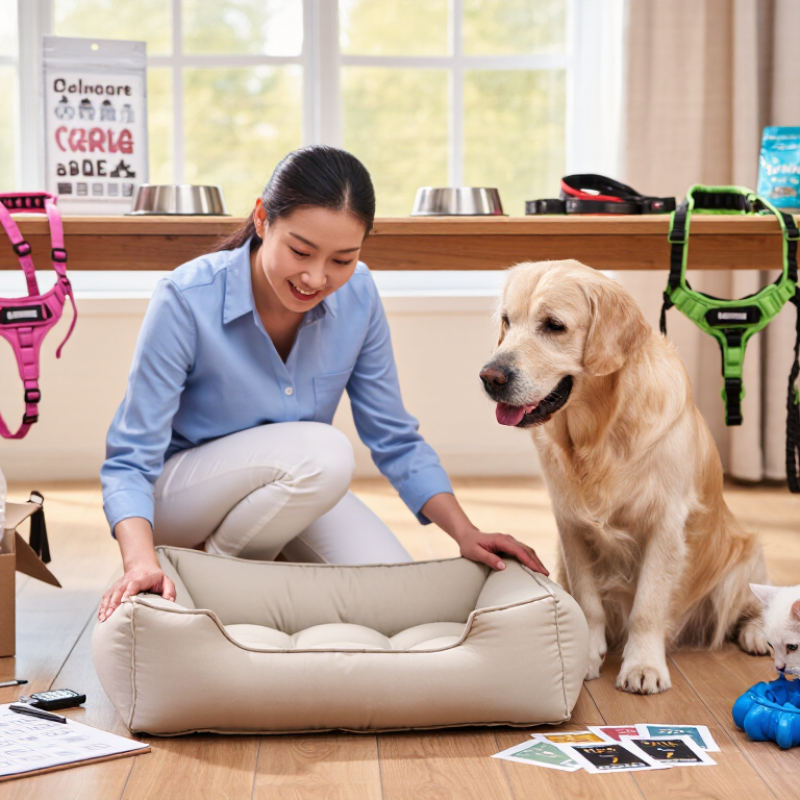
Table of Contents
[Hide]
Define Quality Standards for Pet Products
Quality should be defined before a product reaches a supplier shortlist. The 2024 APPA State of the Industry report valued U.S. pet spending at $147 billion in 2023. That scale raises expectations for safer, clearer sourcing. I set standards around ingredients, function, durability, and traceability. For food and treats, suppliers should provide complete ingredient specifications, nutritional analysis, allergen controls, and batch-level certificates of analysis. Products making nutritional claims should match recognized AAFCO nutrient profiles where applicable.
Evidence matters more than attractive packaging. I ask for test methods, sampling frequency, and independent laboratory results. For toys, testing should examine seams, bite resistance, small detachable parts, and material composition. For bedding, I check fabric strength, dye stability, washing performance, and odor after repeated use. The 2023–2024 APPA National Pet Owners Survey reported that 66% of U.S. households owned a pet, so quality failures can affect a large and diverse customer base. Small animals and senior pets need separate risk reviews.
A clear recall procedure is essential. Suppliers should identify raw-material sources, production dates, lot numbers, and storage conditions within hours, not days. I also review facility audits and worker training records. FDA guidance can support food-safety controls, but compliance documents do not prove every product performs well. I have learned that a perfect checklist can still miss a weak zipper or misleading care label. Samples need real-life use, including chewing, washing, and rough handling. Quality standards should be measurable, reviewed quarterly, and revised when complaints reveal blind spots.
10 Tips for Sourcing Quality Products for Pets - Define Quality Standards for Pet Products
| No. | Sourcing Tip | Quality Dimension | Measurable Standard | Verification Evidence | Acceptance Rule |
|---|---|---|---|---|---|
| 1 | Define the intended use | Product suitability | Specify the target animal, size, age, activity level, and use environment before requesting quotations. | Approved product specification, user profile, dimensions, and use-case requirements. | Reject products whose materials, size, or design do not match the documented use case. |
| 2 | Set material-safety requirements | Chemical and biological safety | Materials must be suitable for animal contact, free from prohibited substances, and compliant with the destination market's chemical limits. | Recent laboratory test reports, material declarations, safety data sheets where applicable, and batch traceability. | Approve only when test methods, sample identity, and results match the finished product and applicable regulations. |
| 3 | Evaluate mechanical durability | Strength and service life | Define product-specific load, pull, bite, compression, abrasion, and repeated-use tests based on the intended animal and application. | Written test method, sample photographs, force or cycle results, and failure analysis. | No breakage, sharp edges, detached parts, or loss of essential function during the agreed test sequence. |
| 4 | Control small-part and entrapment risks | Choking, ingestion, and injury prevention | Identify detachable components, cords, loops, magnets, batteries, and accessible stuffing that may create hazards for the target animal. | Design-risk assessment, failure-mode review, sample inspection, and age or size-use warnings. | Redesign or add controls whenever a foreseeable use or failure could expose a hazardous small part. |
| 5 | Verify hygiene and cleanability | Sanitation and maintenance | Surfaces should be non-toxic, free from visible contamination, and compatible with the cleaning method stated in the instructions. | Cleaning validation, swab or microbiological results where relevant, packaging inspection, and care instructions. | The product must remain functional and hygienic after the specified cleaning and drying procedure. |
| 6 | Check functional performance | Performance consistency | Translate product claims into measurable criteria such as leak resistance, fit range, airflow, absorption, noise level, or dispensing accuracy. | Approved golden sample, inspection checklist, functional test records, and claim-supporting documentation. | Every production lot must meet the documented specification and remain consistent with approved claims. |
| 7 | Assess supplier quality systems | Process control | The supplier should maintain documented incoming, in-process, final, and corrective-action controls appropriate to product risk. | Quality manual, process-control plan, internal audit records, inspection forms, and corrective-action history. | Use suppliers with documented controls and require corrective action for recurring defects. |
| 8 | Approve samples before production | Design and batch conformity | Compare pre-production samples with drawings, approved materials, color references, dimensions, packaging, and functional requirements. | Signed sample approval, controlled specification, inspection photos, and revision history. | No production change is permitted without documented approval and updated technical records. |
| 9 | Use risk-based inspections | Defect detection | Classify defects as critical, major, or minor and set an inspection plan using an established sampling approach such as ISO 2859-1 when appropriate. | Inspection standard, sampling plan, defect classification, lot records, and inspector qualification evidence. | Zero tolerance for safety-critical defects; major and minor defect limits must be agreed before inspection. |
| 10 | Require traceability and continual review | Recall readiness and improvement | Each lot should be traceable to production date, materials, inspection results, shipment records, and applicable corrective actions. | Lot codes, batch records, retained samples, complaint log, supplier scorecard, and recall procedure. | Maintain records for the period required by applicable law and review defect trends at defined intervals. |
Note: Product specifications, testing methods, sampling limits, labeling, and record-retention periods should be adjusted to the product category and destination-market requirements.
Related Posts
-
Unleashing Opportunities: Pet Products Shine at the 137th Canton Fair with Record International Attendance
-
Top 10 Home Pets from Chinese Manufacturers at the 137th Canton Fair
-

Best Dogs Home Products for Global Buyers in 2026?
-

5 Essential Tips for Choosing the Best Pet Dog for Your Family
-

7 Essential Tips for Choosing the Perfect Toys for Your Pet to Boost Their Happiness and Health
-

Why Are Dog Products in High Demand Worldwide?