
You have no items in your shopping cart.

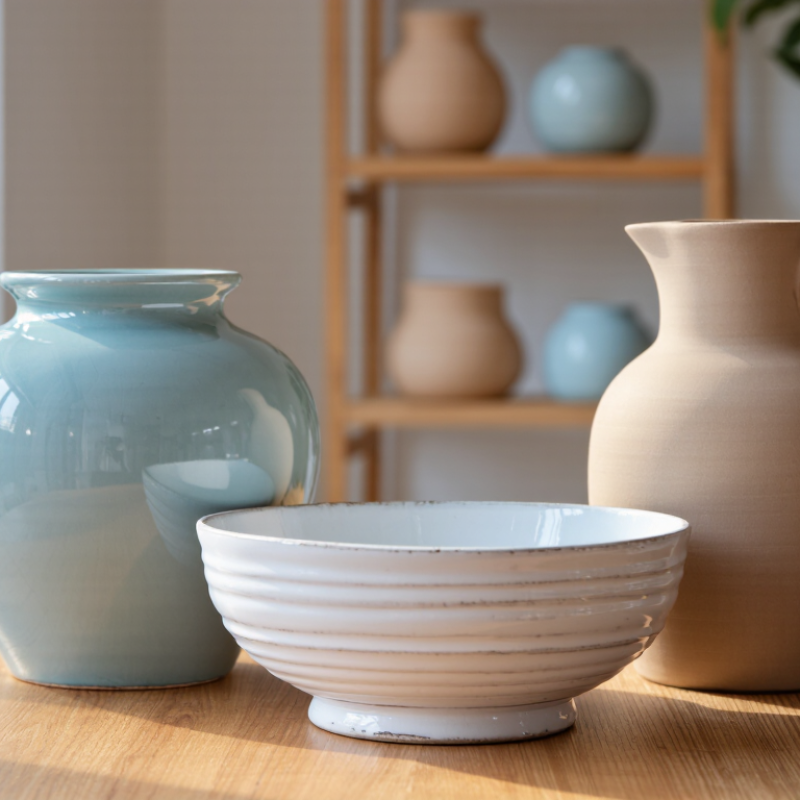
Before contacting a supplier, define the exact role of your ceramic home decor. Will it be a small vase, candle holder, sculptural bowl, or wall piece? Each category changes tooling, breakage risk, packaging, and pricing. Grand View Research valued the global home decor market at approximately $682.9 billion in 2023, with projected annual growth of 4.8% through 2030. That scale creates opportunity, but vague requirements still produce expensive mistakes.
Write a practical product brief. Include dimensions, clay body, glaze finish, color tolerance, weight, target cost, order quantity, and delivery window. State whether pieces must be food-safe or decorative only.
Ask for sample approval before mass production. Specify carton strength, inner protection, drop testing, and acceptable defect rates.
A 2% surface imperfection may be reasonable for handmade ceramics, but a cracked rim is not.
Sustainability also needs measurable details. PwC’s 2024 Voice of the Consumer Survey found that consumers were willing to pay about 9.7% more for sustainably produced goods. Request recycled content percentages, firing energy information, and packaging specifications.
Do not accept vague claims. I have seen attractive samples hide weak cartons and inconsistent glaze colors.
My first brief often focuses too heavily on appearance. It should also define replenishment speed, inspection records, payment milestones, and corrective actions.
A perfect specification is rare. Leave room for honest testing.