
You have no items in your shopping cart.

An Embedded Tablet is a compact computing device built into a larger product or installation. Unlike a tablet meant to be carried around, it usually serves a defined task in a fixed location. You might see one behind the glass of a self-service kiosk, fitted into a machine’s control panel, or mounted at a reception desk. The screen draws attention, but the processor, ports, power supply, and mounting system matter too. That matters.
The term is not perfectly consistent across manufacturers. Some use it for a rugged tablet mounted in equipment; others mean a purpose-built computer with a touchscreen. Checking the device’s specifications is more useful than relying on its label. In practice, an embedded system may display instructions, collect selections, show operating data, or let staff adjust equipment through a touch interface. A factory operator, for example, might use the screen to check a machine status and enter a setting without reaching for a separate computer.
Choosing one involves more than screen size. Consider how it will be mounted, what software it must run, how it receives power, and whether its connectors suit the installation. Dust, vibration, heat, and frequent cleaning can also affect the choice, depending on the setting. No single model fits every job. This guide explains what an Embedded Tablet is, how it is used, and which practical details are worth checking before it becomes part of a system. Some decisions still require testing in the actual installation; specifications alone cannot tell the whole story.
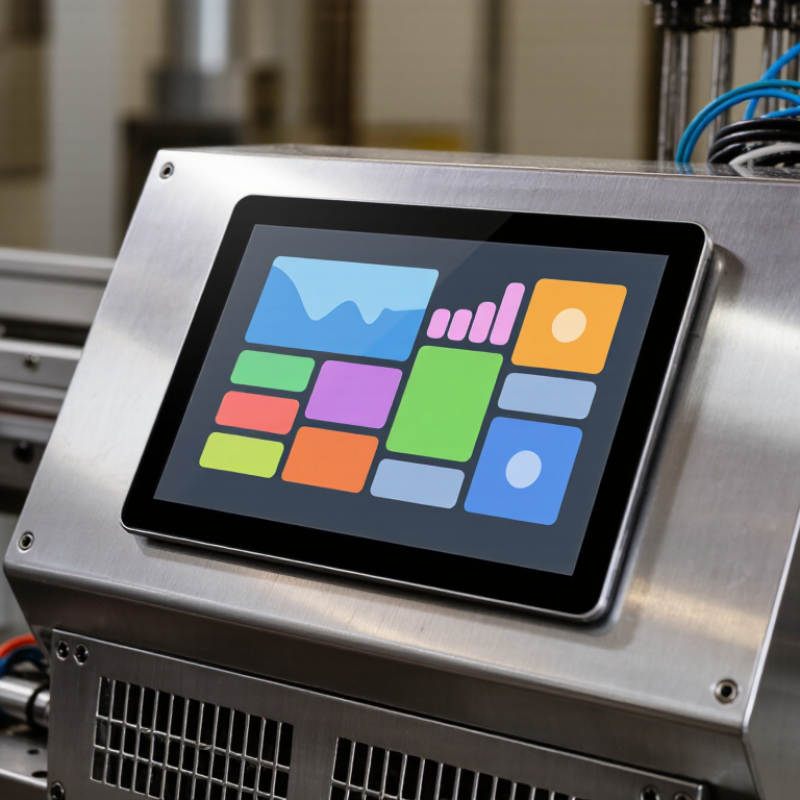
An embedded tablet is a compact touchscreen computer designed to become part of a larger product or system. Unlike a general-purpose tablet, it is usually selected for a specific job and installed in a fixed position. It may sit behind a kiosk panel, attach to a machine, or fit into a control cabinet. Its processor, display, ports, and operating system are chosen to support that role. The term can be a little fuzzy, though: some products are complete tablets, while others are display-and-computer modules.
Embedded tablets are used where people need to view information or enter commands at the point of work. For example, a factory operator might check a machine status on a mounted screen, or a visitor might use a self-service kiosk. In these settings, reliable mounting, screen brightness, touch response, and connection options matter as much as computing speed. Dust, vibration, temperature, and continuous operating hours should also be considered. A suitable enclosure helps, but it does not make every device suitable for every environment.
Tips: Check the mounting dimensions, available ports, power requirements, and expected operating temperature before choosing a unit. Test the screen with gloves if users may wear them. Small details count. Also confirm how software updates and repairs will work; these are easy to overlook, and sometimes the installation plan needs another look.
An embedded tablet combines a screen, computing hardware, power circuitry, and purpose-built software in one compact device. Its display usually includes an LCD or OLED panel, a touch sensor, and a protective cover glass. The touch layer must still respond when an operator wears gloves or works near dust. Small details matter.
At the center is a system-on-chip, which handles processing, graphics, and sometimes AI workloads. RAM supports active tasks, while flash storage holds the operating system and application data. Wireless components may include Wi-Fi, Bluetooth, or cellular radios; wired ports connect peripherals such as scanners and sensors. IDC’s 2024 Worldwide Edge Spending Guide estimated global edge-computing spending at $232 billion that year, reflecting growing investment in processing closer to devices.
Power-management circuits regulate voltage and charging, while a battery may support mobile use. The enclosure protects these parts and helps manage heat, vibration, and everyday handling. Heat is real. IoT Analytics reported 18.8 billion connected IoT devices at the end of 2024, highlighting how often embedded hardware operates as part of a network. Software matters just as much: the operating system, drivers, and security updates determine whether components work together reliably. No design is perfect; choosing rugged materials can add weight, and stronger processing can shorten battery life.
What Is an Embedded Tablet and How Is It Used?
How Does an Embedded Tablet Work?
An embedded tablet combines a touchscreen, processor, memory, and operating system in one device designed for a specific job. When powered on, its firmware starts the operating system and launches the application that controls the display and connected equipment. A worker might tap a screen to set a temperature; the tablet then sends that command through a wired interface or wireless connection. It can also read data from sensors, process it locally, and show an alert without waiting for a remote server. IoT Analytics’ State of IoT report estimated 18.8 billion connected IoT devices worldwide by the end of 2024, highlighting the growing need for dependable interfaces between people and connected systems. That figure covers IoT devices broadly, not embedded tablets specifically.
Tips: Check the tablet’s operating temperature, mounting method, and available ports before installation. Test it with the actual sensors and software. In practice, integration is rarely seamless at first; cable access and screen glare can be easy to overlook.
For reliability, designers often limit background processes and use watchdog software to restart an unresponsive application. Some tablets store data locally during network outages and sync it later. This helps, but local storage and recovery behavior still need testing. A tablet can display information clearly and still fail if its interface, power supply, or application is poorly matched to the task.
| Dimension | How It Works | Typical Use | Practical Design Considerations |
|---|---|---|---|
| Definition | An embedded tablet is a compact computing device built into, or installed as part of, a larger product or system. It combines a display, computing hardware, and input methods in one interface. | Provides a local screen for operating equipment, viewing information, or entering settings. | It is designed for a specific role rather than general-purpose mobile use, although some models can run familiar operating systems and applications. |
| Computing module | A processor runs the operating system and application software. Memory stores active data, while internal storage holds software, configuration files, and other persistent data. | Runs control panels, monitoring interfaces, check-in software, or equipment-specific applications. | Processor performance, memory, and storage should match the application’s workload and expected service life. |
| Touch display and input | The display presents interface elements. A touch sensor detects a finger or stylus and sends input coordinates to the operating system; some systems also use physical buttons or keyboards. | Allows users to select controls, enter values, review status, and navigate menus directly on the device. | Screen size, brightness, touch method, and surface durability should suit the viewing distance and operating environment. |
| Application software | Software translates user actions into commands, processes incoming information, and presents results. It may communicate with other software or devices through defined interfaces. | Controls a workflow such as adjusting settings, displaying measurements, or recording a service request. | Applications should be tested with the device’s operating system, display, and connected hardware. |
| Connection to equipment | Depending on the design, wired interfaces or wireless networking carry data between the tablet and other components. The tablet may display data, send commands, or do both. | Connects a user interface to sensors, controllers, scanners, peripherals, or a local network. | Interface choice depends on distance, data needs, installation conditions, and the equipment’s communication requirements. |
| Power and startup | Power may come from an internal battery or a fixed supply. In a fixed installation, the device can be configured to start its application automatically when powered on. | Supports unattended or continuously available interfaces in kiosks, control stations, and installed equipment. | Power protection, heat management, and recovery behavior after an outage should be considered for the installation. |
| Mounting and enclosure | The tablet is secured within a housing, panel, stand, or other mounting structure. The enclosure protects the device and provides a stable, accessible user interface. | Integrates a display into a machine, wall panel, service counter, or information point. | Mounting, ventilation, cable routing, cleaning requirements, and exposure to dust or moisture depend on the location. |
| Common applications | The device serves as the human-machine interface (HMI) or information terminal for a larger system. | Examples include industrial equipment interfaces, self-service kiosks, room-control panels, medical workflow displays, and point-of-service terminals. | Suitability depends on the required software, connectivity, operating conditions, and applicable safety or regulatory requirements. |
Note: Features and interfaces vary by device and application. An embedded tablet is not necessarily the component that directly controls every connected machine; some systems use a separate controller for real-time or safety-critical functions.
Embedded tablets appear wherever people need a fixed, touch-friendly interface near a task. In factories, they can sit beside production lines, showing machine status, work instructions, or quality checks. The International Federation of Robotics reported 4,281,585 industrial robots operating in factories worldwide in 2023. That figure does not measure tablet use, but it shows the scale of automated environments where clear operator interfaces matter. A tablet mounted near a conveyor can save workers from walking back to a central terminal. Small detail, real difference.
Hospitals and clinics use embedded tablets at bedside carts, check-in stations, and diagnostic equipment, where staff need to view or enter information quickly. Retail counters, hotel reception desks, public kiosks, and transit terminals also use them for ordering, registration, ticketing, or wayfinding. IoT Analytics estimated 16.6 billion connected IoT devices worldwide in 2023; embedded tablets can provide a human-facing control point within these broader connected systems. The fit is not always elegant. Glare, cleaning routines, mounting height, and network outages can all undermine usability, so placement and maintenance deserve attention before deployment. A screen is only useful when people can reach it, read it, and trust the information it displays.
An embedded tablet is a computer built into a machine, vehicle, kiosk, or control panel. Selection starts with the job site, not screen size. A tablet beside a production line may face vibration, dust, oil, and repeated cleaning. A sunlit loading bay needs a bright display; gloved operators need responsive touch. Heat is unforgiving. Treat the operating-temperature range and ingress rating as minimum checks, not marketing shorthand.
MarketsandMarkets’ Rugged Tablet Market report valued the global market at USD 1.3 billion in 2023. It forecast USD 1.8 billion by 2028, a 6.7% compound annual growth rate. That growth signals demand for field-ready computing, but it cannot identify the right configuration for every installation. Match processor, memory, and storage to the workload: a simple dashboard differs from local image analysis. Check wired connections, wireless coverage, mounting, power input, and repair access. Small omissions become expensive.
Confirm the operating system’s support window, update process, and compatibility with existing software. For a machine interface, test glove use, viewing angles, and touch accuracy under real lighting. Ask about replacement parts and long-term availability before deployment. A specification sheet rarely captures the whole experience; wet gloves can change touch response, and installation space is often tighter than drawings suggest. A short pilot on the actual line can expose those gaps before wider purchasing.