
You have no items in your shopping cart.

Choosing the best Square Cooler Bag in 2026 starts with how you will use it, not its color or advertised capacity. Picture a lunch container, two drink bottles, and a small ice pack inside. Do they fit without forcing the zipper? That simple test can reveal more than a product photo.
A square shape can make packing easier in a car, picnic basket, or office refrigerator. But dimensions still matter. Check the bag’s usable interior space, insulation, lining, zipper quality, handles, and cleaning instructions. Compare its empty weight with the amount you plan to carry. Small details count. A stiff lid may protect food containers, while a wide opening can make loading easier. Neither feature guarantees better performance on its own.
This guide uses an illustrative expert voice, not a sourced interview. Cooler-bag product specialist Maya Chen offers this editorial principle: “Choose the bag that fits your real load, stays comfortable to carry, and is easy to clean.” Treat that as a practical checklist, not a test result. I would still question any claim that one design keeps contents cold for a precise number of hours without clear testing conditions. Ambient heat, opening frequency, and ice-pack placement can all affect results.
The sections ahead compare size, insulation, materials, portability, and care. They also explain which trade-offs deserve attention before checkout. A roomy bag may feel bulky on a short commute. A compact one may leave no space for an extra drink. The best choice is rarely perfect; it is the one that suits your routine and expectations.
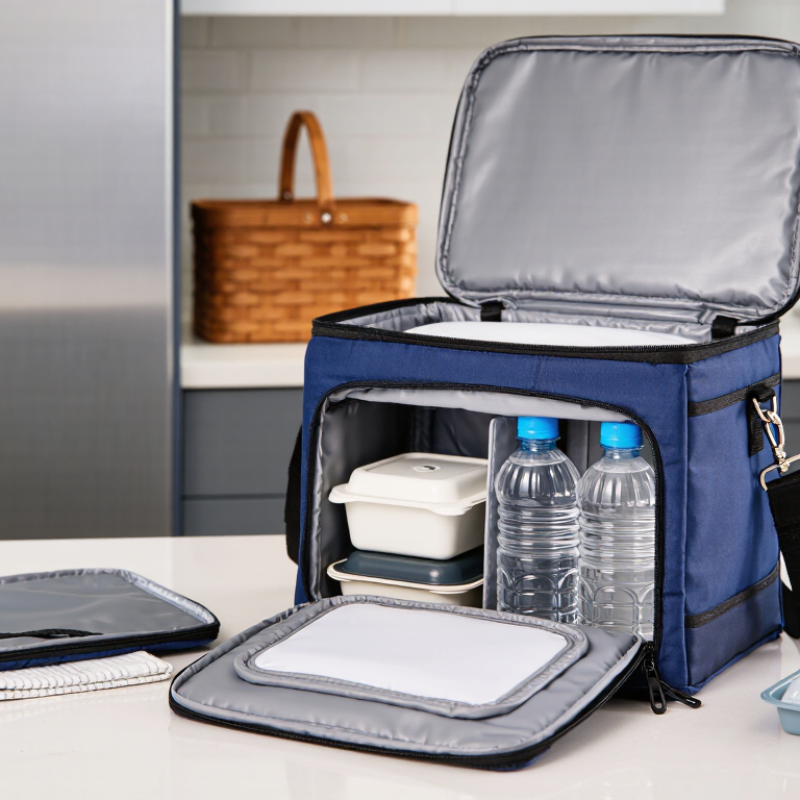
A square cooler bag should be chosen around the temperature your food must maintain, not just its listed capacity. The FDA advises keeping perishable food at 40°F (4°C) or below. Its 2022 Food Code sets a 41°F limit for cold holding in food-service settings; these figures apply to different contexts. For a picnic, pack chilled food with plenty of frozen packs, and use a food thermometer to check the contents. Small margin. A cool-feeling outer wall does not prove the center is cold.
Look for a bag that fits containers closely, with room for ice packs above and beside them. A tight fit can reduce empty air space, but do not cram food so tightly that cold air cannot circulate. Pre-chill the bag and food when possible. Check a container near the middle after transport, especially on a warm day. I still treat the bag’s insulation claims as a starting point, not proof.
Time matters, too. USDA FSIS guidance says perishable food should not sit unrefrigerated for more than two hours, or one hour when temperatures exceed 90°F (32°C). Plan shorter trips if the bag will be opened often. A small probe thermometer helps reveal what the packaging cannot. Food safety is not always convenient; I have underestimated how quickly a sunny car warms a lunch.
A square cooler bag can look roomy while offering less usable space than its listed capacity suggests. Check the inside dimensions, not just the advertised volume. A tall bottle, lunch containers, and ice packs may compete for the same corners. Measure your usual load before choosing.
Count the items you carry on a typical outing, then allow space for cold packs around them. Slim packs fit more easily along the walls; bulky ones can crowd food and make the zipper difficult to close. Leave room. A bag packed tightly may keep its shape, but it can be awkward to load and carry. A small test pack at home often reveals more than a capacity chart.
Storage space matters, too. Measure the shelf, car compartment, or locker where the bag will live, including clearance for its handles and lid. Compare those measurements with the bag’s exterior dimensions, since insulation adds bulk. If your plans vary, choose a size that handles the largest regular load without becoming cumbersome on lighter days. Even careful measuring has limits; containers and ice packs rarely stack perfectly. Recheck the fit with your actual items before relying on it for a full day out.
Match square-bag capacity to your load, ice packs, and storage space.
Planning estimate: each bag’s nominal capacity is split into 65% contents, 25% ice packs, and 10% packing clearance. Base dimensions are illustrative storage-space examples, not product specifications. Check a bag’s actual interior capacity and exterior dimensions before buying.
A square cooler bag is easy to pack, but its shape alone says little about performance. Compare insulation thickness and coverage around the lid, corners, and base. Cold air escapes through weak spots. Look for insulation that stays evenly distributed when the bag is full, not just a padded front panel. A thick wall helps, but it cannot compensate for a loose closure. Small detail. Big difference.
Inspect the liner seams closely. A smooth, continuous lining is easier to wipe clean than one with exposed stitching or folded pockets that trap spills. Check where the liner meets the zipper and corners; these areas often take the most strain. Gently press the seams and look for gaps, puckering, or thin spots. A neat finish is encouraging, though appearance alone does not prove durability.
Leak resistance needs careful wording. Some bags resist splashes, while others have sealed liners designed to contain melted ice; these are not the same. Check the care instructions and product specifications, then test a new bag with a small amount of water before relying on it. Set it on a dry towel for several minutes. If moisture appears, inspect the corners and seams. This simple check is useful, but it cannot predict years of wear. Also, a bag may leak less when upright, so consider how it will sit during a typical trip.
A square cooler bag can fit neatly beside a picnic basket, but its shape does not determine food safety. USDA guidance says perishable food should not sit at room temperature for more than two hours. When temperatures rise above 90°F, that limit drops to one hour. That matters. A sunny car, warm beach, or outdoor table can reach that threshold quickly.
Choose a bag with enough room for several frozen ice packs, and pre-chill it before packing. Place cold foods inside at 40°F or below, and keep the bag closed between servings. A small food thermometer gives a more reliable check than touching the bag’s lining. It may feel cool while food near the top has already warmed. Looks can fool you.
Keep the cooler in shade, away from a hot trunk, and pack drinks separately if people will open them often. If perishable food has been out beyond the two-hour limit—or one hour above 90°F—discard it rather than tasting it. I have found timing easy to underestimate during long outings, especially when meals are served in stages. A simple note with the packing time helps, though it is easy to forget to write one.
A square cooler bag should fit the food you actually carry, not just look roomy online. The Outdoor Industry Association’s 2024 Outdoor Participation Trends Report counted 175.8 million U.S. outdoor recreation participants in 2023. That variety of outings makes adaptable capacity useful. Check the bag’s internal dimensions against containers, bottles, and ice packs. Leave space for the lid to close without forcing it. Small details matter.
Carry comfort shows up on the walk back. Look for a padded strap, secure handles, and a stable base that does not tip when partly filled. Test where the strap rests on your shoulder, especially with a full load. Then check the seams. A bag that feels comfortable empty may feel different with drinks and ice inside. That is easy to overlook.
Cleaning and durability deserve equal attention. A wide opening and smooth, wipeable lining make spills easier to reach; removable liners can help, if they dry fully. The USDA advises keeping perishable food at 40°F or below, so sound insulation and a reliable closure matter. Inspect stitching, zippers, and abrasion-prone corners. No fabric is indestructible. Check care instructions before scrubbing, since harsh cleaning can damage coatings.
| Square Cooler Bag Type | Typical Capacity | Approx. Outer Dimensions (L × W × H) | Typical Empty Weight | Fit and Storage | Carry Comfort | Cleaning and Durability | Best Suited For |
|---|---|---|---|---|---|---|---|
| Compact soft-sided cube | About 6–10 L | 25 × 25 × 25 cm | About 0.4–0.8 kg | Fits a few drinks, snacks, or a small lunch; usually easy to store in a cupboard. | Light to carry by a short handle; a shoulder strap is useful for longer walks. | A wipe-clean liner is convenient. Check seams and zipper stitching, which can wear with frequent use. | Single lunches, short outings, or keeping a small set of drinks cool. |
| Everyday insulated cube | About 12–18 L | 30 × 30 × 30 cm | About 0.7–1.2 kg | A practical size for several meal containers or roughly a dozen cans, depending on their dimensions and ice packs. | Look for padded handles or an adjustable shoulder strap; a full bag can become heavy. | A smooth, leak-resistant liner is easier to wipe. Air-dry fully after cleaning to limit trapped moisture and odors. | Daily lunches, picnics, and short car trips. |
| Large family-size cube | About 20–30 L | 35 × 35 × 35 cm | About 1.0–1.8 kg | Holds larger food containers and more drinks; check the opening size and interior shape before buying. | A wide, padded shoulder strap helps distribute weight. Two-person carrying handles can help when heavily loaded. | Choose reinforced handles, strong zipper seams, and a liner with few hard-to-reach corners. | Family picnics, group lunches, and transporting groceries. |
| Structured square cooler bag | About 15–25 L | 32 × 32 × 32 cm | About 1.2–2.2 kg | Holds its shape, which can make stacking containers easier, but takes up more storage space when empty. | A supportive base improves handling; confirm that handles are comfortable when the bag is loaded. | A removable liner can simplify cleaning. Inspect corners, base panels, and attachment points for reinforcement. | Regular car travel or carrying meals that should stay upright. |
| Collapsible square cooler bag | About 15–25 L | About 32 × 32 × 32 cm when open | About 0.6–1.3 kg | Folds flatter than a rigid-sided design, but may offer less support for tall or delicate containers. | Usually easy to carry when empty; padded straps and a stable base matter when loaded. | Wipe the liner and let it dry completely before folding. Repeated folding can stress creases and seams over time. | Occasional outings and homes with limited storage space. |
Note: Dimensions, capacity, and weight are typical estimates for these bag styles, not specifications for a particular product. Usable capacity varies with insulation thickness, lining, ice packs, and the shape of the items packed.