
China Top Bedroom Fur Carpet Manufacturers and Suppliers

A Bedroom Fur Carpet adds warmth where bare floors feel cold, especially beside a bed or beneath a reading chair. China’s manufacturers and suppliers offer varied pile heights, colors, backing materials, and production options. This guide introduces makers and explains what buyers can check before requesting samples or discussing an order.

Interior designer William Morris offered a useful principle for choosing home furnishings: “Have nothing in your houses that you do not know to be useful, or believe to be beautiful.” That idea suits a Bedroom Fur Carpet. Softness matters, but so do construction, shedding, color consistency, and how easily the carpet can be cleaned. Details count. A close-up of the pile, a look at the backing, and a clear product specification can reveal more than a polished catalog image.

The manufacturers featured here should be assessed on more than price. Ask about fiber content, dimensions, available finishes, sample lead times, and quality checks. Confirm how the supplier handles packaging and communication, too. These are practical questions, not guarantees. No supplier is perfect. Even a promising sample may not represent every unit in a larger order, so expectations need careful checking. This overview aims to help buyers compare options with clearer criteria, while recognizing that product claims still need independent verification.
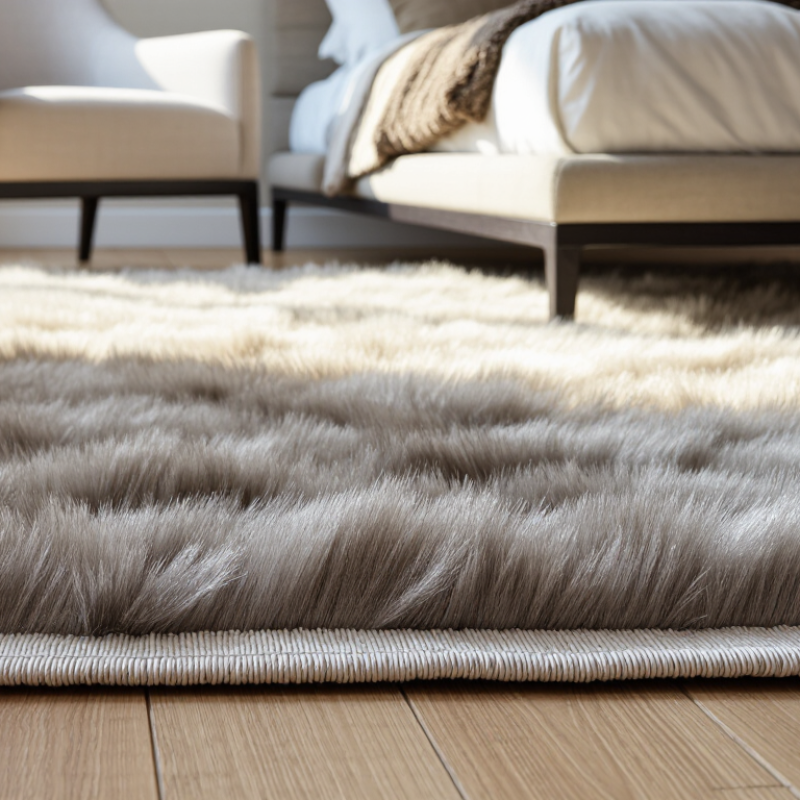
China Top Bedroom Fur Carpet Manufacturers and Suppliers

Bedroom Fur Carpets: Types, Uses, and Key Features

Bedroom fur carpets usually fall into three groups: faux-fur synthetics, wool or sheepskin, and long-pile shag rugs. Faux fur commonly uses polyester or acrylic and gives a smooth, consistent surface. Wool feels resilient underfoot, but spills need quick attention. Shag styles add warmth beside a bed, though their deep pile can hold dust and crumbs. Soft, not silent.

Grand View Research estimated the global carpets and rugs market at USD 51.3 billion in 2023. This broad figure does not isolate bedroom fur carpets, but it shows the scale of the wider category.

For bedroom use, check pile height, density, edge finish, and backing. A dense, glossy pile may look luxurious, yet appearance alone is a weak quality test. Check the backing. A rug that shifts on a polished floor can be inconvenient; a compatible non-slip underlay may help.

Care instructions matter as much as softness. Vacuum gently, especially around long fibers, and follow the maker’s cleaning guidance for the specific material. Synthetic piles may be easier to spot-clean, while natural fibers can be more sensitive to moisture. One detail is easy to miss: a plush surface does not guarantee a durable rug. Inspect the seams and backing, and consider whether the pile suits your cleaning routine. I would not choose by touch alone; that shortcut is tempting, but incomplete.

Materials and Construction Methods for Fur Carpets

China Top Bedroom Fur Carpet Manufacturers and Suppliers
Materials and Construction Methods for Fur Carpets

A bedroom fur carpet can use synthetic fibers, wool, or other natural fibers. Each material feels different underfoot. Polyester fibers often create a soft, fluffy surface and are relatively easy to clean. Wool offers warmth and resilience, but needs careful maintenance. Check the fiber label rather than judging by appearance alone.

Construction matters, too. A tufted pile is formed by pushing yarn through a backing, while woven rugs have fibers interlaced into the structure. Look for secure stitching around the edges and a backing that lies flat. Run your fingers across the pile: loose fibers or uneven patches may signal inconsistent construction. A dense pile looks plush, but it can trap dust. That trade-off is easy to overlook.

Tips: Measure the bed area before choosing a size, and leave a visible border of flooring where possible. Ask how the rug should be cleaned, then test any cleaner on a hidden spot. Use a nonslip underlay on smooth floors. It helps prevent shifting, though the rug may still need occasional adjustment.

How Chinese Manufacturers Produce Bedroom Fur Carpets

Bedroom fur carpets are commonly made with long-pile synthetic yarns, often polyester, though fiber choices vary by design and price. Textile Exchange’s Materials Market Report 2024 estimates global fiber production reached 124 million tonnes in 2023, with polyester accounting for about 57 percent. This is useful context, not a carpet-specific market share.

Small details matter.

Production typically begins with polymer pellets melted and spun into filaments. The filaments are textured, twisted into yarn, and tufted or knitted into a primary backing. Manufacturers adjust pile height, density, and yarn thickness to create a plush surface. Longer pile feels soft underfoot, but it can trap more dust and show footprints.

Trade-offs are real.

After tufting, a secondary backing and adhesive coating help stabilize the carpet. The surface may then be dyed, heat-set, sheared, and brushed to even out the pile. Quality checks can include pile-weight measurement, backing adhesion, colorfastness, and shedding tests.

A soft sample alone proves little.

Production records and repeatable test results offer stronger evidence, though factory methods and test limits can differ. Even careful finishing may leave slight variations in shade or pile direction.

That imperfection deserves honest disclosure.

How to Assess Chinese Fur Carpet Manufacturers and Suppliers

Assessing a Chinese bedroom fur carpet supplier takes more than admiring a soft showroom sample. Grand View Research valued the global carpets and rugs market at USD 51.93 billion in 2023. Textile Exchange’s Materials Market Report 2024 reported global fiber production of 124 million tonnes in 2023, with polyester the largest fiber group. These figures show the scale of the market, not the reliability of any individual factory. Looks are not enough.

Request the pile and backing composition, production tolerances, and recent test reports. Check colorfastness, abrasion resistance, shedding, and backing adhesion against the specifications for your market. Ask how the factory controls pile height and density between production runs; a sample can feel plush while a bulk order varies noticeably.

I would not rely on a certificate image alone. Verify its issuer, scope, and validity, then compare the named facility with the actual production site. A small pilot order can reveal loose fibers, uneven edges, or persistent odor that photographs hide.

Review the supplier’s inspection records and confirm how defects are handled in writing. Some details are easy to overlook, including packaging compression and recovery time after unpacking.

Sourcing and Purchasing Considerations for Buyers

When sourcing bedroom fur carpets from manufacturers and suppliers in China, define the product before comparing quotations. Specify fiber type, pile height, backing material, dimensions, color, and edge finish. These details affect softness, shedding, stability, and cleaning needs. Ask how measurements are checked and what tolerances apply. Request product specifications and available quality-control records. A clear brief makes supplier responses easier to compare.

Review a physical sample under ordinary room lighting. Feel the pile, check the backing, and measure the carpet yourself. A sample can look excellent while a later production batch varies; confirm how consistency is monitored. Request a written quotation covering unit price, minimum order quantity, sample charges, packaging, lead time, and shipping terms. Clarify how defects or shortages are handled. Compare the full landed cost, not only the factory price. Timelines can shift, so leave room for inspection and transport delays.

Tips: Photograph the sample beside a ruler and note its color under daylight. Keep one approved reference sample. Ask for a pre-shipment inspection when practical. Don’t assume “fur-like” describes one uniform material; request the exact fiber and care instructions.