
You have no items in your shopping cart.

Buying a Cabinet Hinge for international projects is rarely a simple price comparison. The right choice affects door alignment, opening comfort, noise, installation speed, and long-term customer satisfaction. A hinge may look like a small metal part, yet it carries repeated movement every day.
Paul McAlary, a respected cabinet-industry consultant, offers a practical reminder: “The best hardware is the hardware that works quietly and consistently for the homeowner.” That idea matters for global buyers. A low-cost hinge can create expensive problems when its cup size, overlay, mounting plate, or adjustment range fails to match the cabinet design. Tiny differences matter.
This guide presents ten Cabinet Hinge buying tips for international sourcing teams, distributors, manufacturers, and project buyers. It considers materials, load capacity, opening angles, soft-close performance, corrosion resistance, installation methods, packaging, quality inspection, and supplier communication. Samples should be tested on real doors, not only examined in a catalog. Better still, test them through repeated opening cycles.
There is no perfect checklist. I have seen attractive hinges fail because the mounting screws were weak. I have also seen basic-looking models perform reliably in demanding kitchens. That is worth remembering. Specifications provide direction, but hands-on testing reveals the truth. Buyers should compare several samples, record measurements carefully, and question unclear claims before placing a large order. Small oversights become costly across thousands of cabinets.
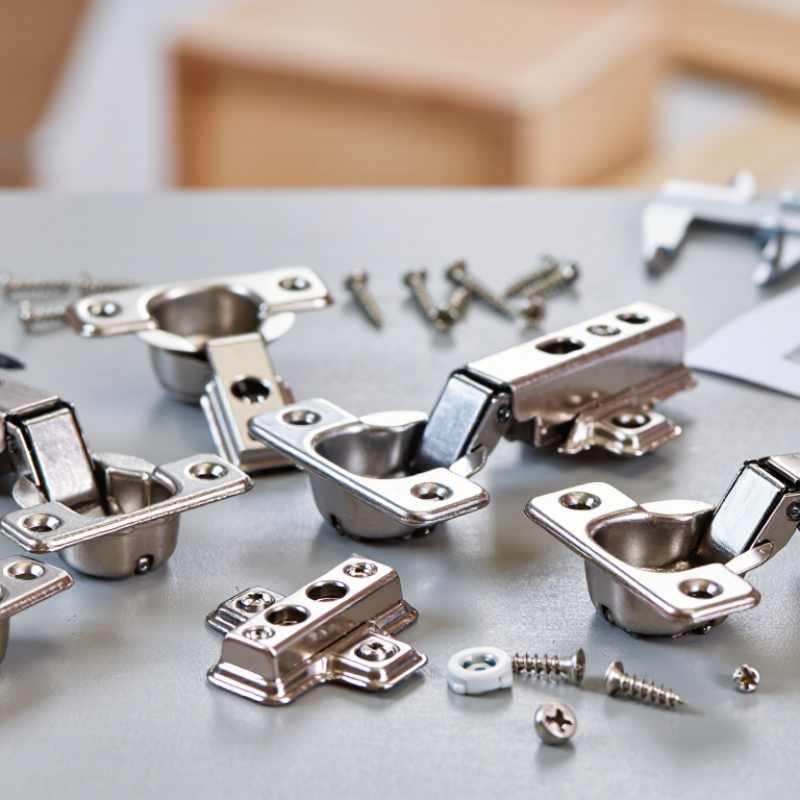
Cabinet hinge selection starts with the door’s movement, weight, and mounting style. Overlay hinges suit doors covering the cabinet frame. Inset hinges fit inside the frame and demand accurate drilling. Half-overlay hinges work well when two doors share one partition. Each type creates a different reveal, opening angle, and installation tolerance.
Concealed European hinges are common for modern cabinets because they offer three-way adjustment. They can correct small height, depth, and side gaps after installation. Butt hinges provide a traditional appearance, while pivot hinges support special doors or wider opening movements. Soft-close models reduce slamming, but their dampers need suitable door weight and closing force. Test this carefully.
Small details matter. Check cup diameter, screw spacing, mounting plate height, and required overlay before ordering. Stainless steel or plated steel may perform better in humid kitchens and utility rooms. For heavy doors, compare the hinge’s tested load with the real door weight, including handles and glass panels. A sample fitting is safer than trusting a catalog drawing alone. I once underestimated frame clearance; the hinge worked, but the door rubbed during opening. That mistake showed why opening-angle checks matter. Ask for cycle-test data, adjustment instructions, replacement parts, and consistent batch dimensions. Cheap hinges can become expensive when installers spend extra hours correcting uneven gaps. Door material, cabinet construction, temperature, and daily use should guide the final choice.
When buying cabinet hinges across borders, accurate door measurements prevent costly compatibility problems. Measure door height, width, and thickness with a steel ruler or caliper. Record measurements in millimeters, then convert only when required.
Measure twice. Do not guess. For overlay doors, measure how far the door covers the cabinet side. For inset doors, check the internal opening and clearance around all edges. Even a two-millimeter error can change the required hinge position. Check the cabinet construction as well. Framed and frameless cabinets usually require different mounting arrangements.
Confirm the hinge cup diameter, cup depth, arm type, and mounting plate pattern. Also verify the door’s opening angle and available space beside adjacent doors. Thick doors may need different screw lengths or hinge geometry. Never rely on a product photograph alone. Ask the supplier for a technical drawing, drilling diagram, and tolerance information. Send your measurements and cabinet photos before placing a bulk order. This exchange often reveals mismatched hole spacing or insufficient clearance.
Test one sample door first. That step feels slow. It is cheaper than correcting an entire shipment. Keep a written record of every dimension, including the measuring tool used. Small inconsistencies between doors can expose weaknesses in an otherwise careful specification. Recheck the sample after installation, because real doors may sag slightly under load. That practical check is easy to skip, and I have found it matters.
The chart shows typical cabinet door thickness ranges associated with common concealed hinge cup sizes. Measure the door thickness, cup diameter, cup depth, and overlay before placing an order, then confirm the exact tolerance with the hinge supplier.
10 Cabinet Hinge Buying Tips for Global Buyers
Evaluating Hinge Materials, Load Capacity, and Durability
In cabinet projects, hinge material often decides how smoothly a door performs after years of use. Stainless steel resists moisture and corrosion, making it suitable for kitchens, bathrooms, and coastal properties. Zinc alloy can provide a clean finish, but its strength depends on design and manufacturing quality. Check the material grade, surface treatment, and screw-hole accuracy before ordering large quantities. Small alignment errors can create visible gaps.
Load capacity requires more than reading a number on a specification sheet. Consider the door’s weight, height, width, thickness, and opening frequency. A heavy glass or solid-wood door may need additional hinges. Test the hinge with the actual door structure, not a lighter sample. I have seen hinges pass a basic inspection but loosen when installed on wide doors. That mistake was avoidable.
Tips: Ask for cycle-test data, corrosion-test conditions, and recommended hinge spacing. Confirm whether the stated load applies to one hinge or the complete set. Inspect movement after repeated opening, especially near the soft-close point. Durability also depends on screw quality and cabinet alignment. Do not ignore installation training. It can matter more than expected. When comparing suppliers, request samples from the same production batch and record any noise, sagging, or uneven closing. Perfect results are not guaranteed, so leave a practical safety margin.
| Tip | Evaluation Dimension | Typical Options or Data Range | What to Check | Recommended Buying Decision |
|---|---|---|---|---|
| 1 | Match the material to the environment | Cold-rolled steel is common for dry indoor cabinets. Stainless steel, especially grades 304 or 316, offers better corrosion resistance. | Consider humidity, salt exposure, cleaning chemicals, outdoor use, and temperature changes. | Use plated steel for normal indoor applications; select stainless steel for kitchens, coastal areas, healthcare spaces, or damp locations. |
| 2 | Compare corrosion protection | Common finishes include nickel plating, zinc plating, passivation, and powder coating. Corrosion performance depends on the complete finish system, not only the base metal. | Ask for coating thickness, salt-spray test method, test duration, and whether the test applies to the finished hinge. | Request documented corrosion-test results for projects exposed to moisture or aggressive cleaning agents. |
| 3 | Calculate load capacity correctly | A typical light or medium cabinet door may use two hinges, while tall, wide, heavy, or frequently used doors may require three or more. | Check door weight, door height, door width, hinge spacing, screw quality, panel material, and opening frequency. | Do not divide the door weight by the number of hinges without a safety margin; verify the manufacturer’s tested capacity for the complete installation. |
| 4 | Allow a practical safety margin | For procurement planning, a safety factor of approximately 1.5 to 2.0 is commonly considered when actual operating conditions are uncertain. | Include the door, handle, glass, attached accessories, impact loads, and repeated closing forces. | Select a hinge system whose tested rating comfortably exceeds the calculated working load rather than choosing the minimum rating. |
| 5 | Review cycle-life performance | Cabinet hinges may be tested from tens of thousands to hundreds of thousands of opening cycles, depending on design and application. | Confirm the number of cycles, test door weight, opening angle, closing speed, load condition, and acceptance criteria. | For kitchens, hospitality, retail, and commercial furniture, prioritize independently documented high-cycle testing. |
| 6 | Evaluate the hinge mechanism | Concealed hinges may include standard-close, soft-close, self-closing, or push-to-open mechanisms. | Check closing consistency, adjustment range, resistance to slamming, noise level, and performance at different temperatures. | Choose soft-close mechanisms for frequent-use areas where noise reduction and controlled closing are important. |
| 7 | Check adjustment and alignment | Many concealed hinges provide three-way adjustment: side-to-side, height, and depth. Some models offer only limited adjustment. | Verify adjustment range, mounting-plate compatibility, screw access, and the ability to correct minor installation variation. | For export furniture and mass installation, select hinges with clear adjustment features and compatible mounting plates. |
| 8 | Inspect wear-prone components | Springs, pins, connecting arms, dampers, and mounting clips are common wear points. Steel components generally provide higher structural strength than many lightweight alternatives. | Look for excessive play, spring fatigue, damper leakage, clip deformation, and loosening after repeated operation. | Request component material specifications and sample testing before approving large-volume production. |
| 9 | Verify installation compatibility | Important dimensions include cup diameter, cup depth, overlay, opening angle, screw-hole pattern, and mounting-plate height. | Common concealed hinge cup diameters include approximately 26 mm and 35 mm, but cabinet construction determines suitability. | Use production samples to confirm door thickness, drilling position, overlay, clearance, and mounting hardware before placing the final order. |
| 10 | Request complete quality documentation | Useful documents include material declarations, dimensional drawings, load or cycle test reports, coating information, inspection standards, and packaging specifications. | Ensure test results identify the hinge model, test conditions, sample quantity, failure criteria, and inspection date. | Compare suppliers using the same technical requirements and approve a pre-production sample before mass shipment. |
When buying cabinet hinges internationally, inspect the manufacturer’s quality system before comparing prices. Ask for production records, material specifications, and batch inspection reports. A reliable supplier should explain how steel thickness, plating, opening cycles, and corrosion resistance are controlled. Look for certifications that match the destination market, such as quality management or product safety documentation. Certificates alone are not enough. Verify the issuing organization and check whether the documents remain valid.
Tip: Request samples from different production batches. Test alignment, screw fit, closing force, and surface finish. A hinge may feel smooth in a showroom but loosen after repeated use. This small test can expose weak springs or inconsistent tolerances. I once focused too much on certification files and not enough on sample performance. That was a costly reminder.
Custom options deserve equal attention. Confirm cup diameter, overlay, mounting plate style, opening angle, soft-close function, and finish requirements. Provide cabinet drawings with clear measurements. Ask whether tooling fees, minimum order quantities, and sample charges apply. Also clarify packaging details, carton strength, labels, and replacement procedures. A custom hinge can solve a design problem, but it may create supply delays. Leave room for testing and correction. Mistakes happen. A careful buyer documents every approved detail before mass production.
Comparing suppliers requires more than checking the lowest unit price. Review hinge material, finish consistency, adjustment range, and tested load capacity. Ask each supplier for factory photos, quality records, and recent production details.
A practical comparison sheet helps prevent attractive quotations from hiding weak specifications. Confirm hole spacing, cup diameter, opening angle, and soft-close performance before requesting prices.
Sample approval should be specific. Request several pieces from the intended production line, not only showroom samples. Install them on the same cabinet material used in your market.
Check alignment, closing noise, spring strength, and surface marks after repeated cycles. A sample may look excellent yet reveal loose screws during installation. That small detail matters. I would also keep one approved sample as a reference during final inspection.
Calculate landed cost, not just the purchase price. Include tooling, packaging, inspection, customs charges, inland delivery, and possible replacement costs.
Compare shipping terms carefully, because responsibilities change between different trade arrangements. Confirm who books transport, prepares export documents, and handles destination charges.
Ask for carton dimensions and gross weight; one poorly planned shipment can consume savings. Payment timing also deserves attention. A lower price may require a large deposit before quality is verified.
This is where buyers should pause and reconsider. Lead times need written confirmation, including sample approval and holiday delays. Build a modest buffer, because global shipments rarely follow the ideal schedule.