
You have no items in your shopping cart.

A waterproof deck should stay dry below as well as resist weather above. That distinction matters when rain slips between boards and reaches a patio, doorway, or storage area. For 2026, the best choice depends on the whole assembly: surface material, seams, drainage, slope, and the space beneath it. A waterproof finish alone cannot fix poor detailing.
Market reports offer context, but not a product verdict. Grand View Research’s global decking-market analysis tracks continued market growth, yet groups products with different materials and performance levels. Its market figures should not be read as proof that any one system is waterproof. Buyers need project-specific evidence: published test results, installation instructions, warranty limits, and details for drains and wall connections. Check the fine print.
Building-science expert Joseph Lstiburek’s familiar advice is, “Build tight, ventilate right.” It is not a decking specification, but it points to a useful principle: control water, then give trapped moisture a way out. That part is easy to overlook. A covered deck can still hide damp framing if water pools at a seam or flashing is poorly fitted. This guide compares PVC, waterproof membranes, and other common options by water control, durability, maintenance, and cost. The honest answer may be less glamorous: the best material can still fail when installed badly. Start with the conditions under your deck, then compare systems designed for them.
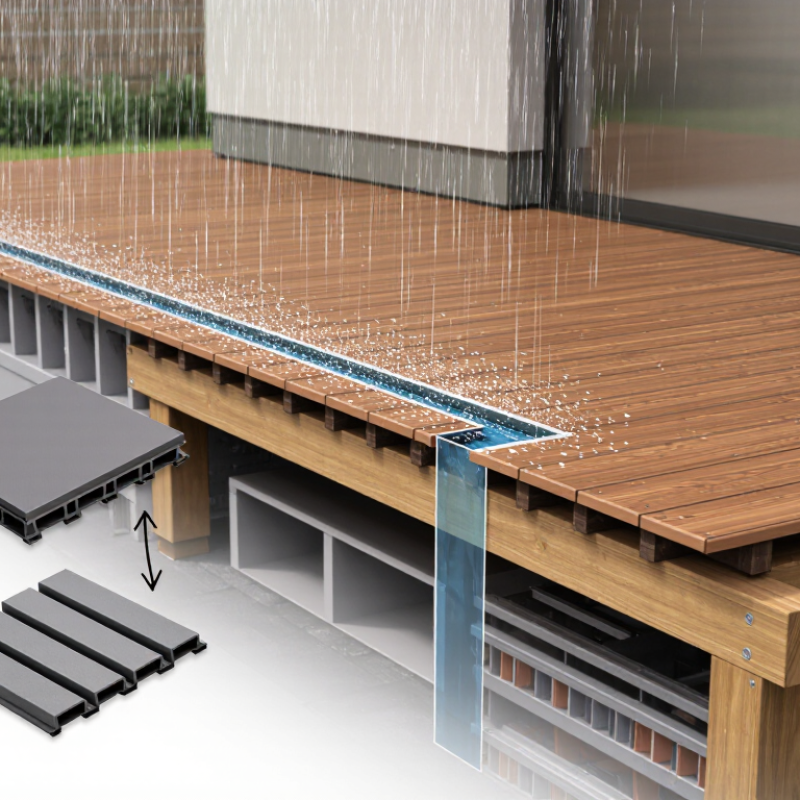
Waterproof decking is a water-management system, not just a board that resists rain. Some deck boards shed water; a separate membrane beneath them can catch water and direct it toward a drain. This distinction matters when a deck sits above a patio or finished room. Seams, screw holes, rail posts, and door thresholds can still let water through. Small gaps matter.
The USDA Forest Products Laboratory’s 2021 Wood Handbook notes that wood-decay fungi generally need moisture content above about 20 percent. That figure helps explain why drainage and drying matter, even with low-maintenance surfaces. ASTM D7032 provides performance criteria for plastic and wood-plastic composite decking, but passing material criteria does not make an entire deck assembly watertight. The installation details decide much of that. A sealed surface can hide trapped water underneath, so “waterproof” should not mean “ignore the drainage plan.”
Tips: Ask where water goes after it passes the walking surface. Check membrane seams, flashing, and drain access before installation. A simple hose test can reveal weak spots, though it cannot replace a proper inspection. I’d be cautious about any design that depends on caulk alone.
“Waterproof decking” describes more than a board’s surface. PVC boards are made from plastic and resist water absorption, while capped composite combines wood fibers and plastic beneath a protective shell. Composite cut ends and gaps still need attention; trapped moisture can affect the framing below. Aluminum is another water-resistant option, though its metal feel and higher heat under direct sun may not suit every space. Concrete pavers can work over a properly drained structure, but they are heavy. Details matter.
Cost is part of the material decision. Remodeling magazine’s 2024 Cost vs. Value report estimated a US wood deck addition at $17,615, with $14,596 in resale value; its composite deck estimate was $25,096, with $16,498 in resale value. These figures compare modeled project costs and resale value, not waterproofing performance. They also vary by region. A pricier surface is not automatically a better-built deck.
Tips: Check the board’s test documentation, drainage details, and installation clearances. ASTM D7032 covers performance requirements for many wood-plastic composite decking products. Ask how the system handles cut ends and water beneath the boards. I would not judge it by a showroom sample alone; the drainage plan can be the weak link.
What Is the Best Waterproof Decking for 2026?
Key Factors for Comparing Decking Options
“Waterproof” describes the surface, not the whole structure. Compare how boards handle standing water, sun exposure, scratches, and temperature changes. Then inspect the joists, fasteners, and drainage path beneath them. A sealed-looking deck can still trap water against its frame. Remodeling’s 2024 Cost vs. Value report estimated a U.S. wood deck addition at $17,615 and a composite deck at $24,206. These are project averages, not material-performance tests or local quotes. They show why purchase price alone can mislead.
Ask for published water-absorption and slip-resistance test results, plus cleaning instructions and warranty exclusions. Check whether gaps allow water to drain and whether the substructure needs extra protection in a wet climate. Dark boards can become uncomfortable in direct summer sun; request a sample and test it outdoors. Waterproof is not maintenance-free. Details matter. I would also compare replacement costs over time, though lifespans vary with installation and climate.
Tips: After rain, look for puddles, damp ledger connections, and slow-drying shaded corners. Compare installed quotes, not board prices alone. If a seller cannot provide test methods, treat the claim cautiously.
| Decking option | Water and moisture performance | Typical service life | Maintenance needs | Slip and heat considerations | Relative upfront cost | Best suited for |
|---|---|---|---|---|---|---|
| Solid PVC decking | Boards are made from plastic and do not absorb water like wood. Board-level water resistance does not make the deck structure or joints watertight. | Often estimated at about 25–50 years, depending on product quality, installation, climate, and care. | Wash periodically with water and a suitable cleaner; inspect fasteners, gaps, and drainage. | Texture and surface temperature vary. Dark boards in direct sun can become hot; wet-surface traction depends on the board’s finish. | High | Projects where low board-level moisture absorption is the leading priority. |
| Capped composite decking | A protective polymer cap helps resist surface moisture and staining. The composite core is not necessarily waterproof if water reaches exposed edges, cuts, or damaged areas. | Commonly estimated at about 25–30 years, with actual performance affected by construction and exposure. | Routine washing; remove leaves and standing debris. Follow the manufacturer’s guidance for stains and snow removal. | Surface texture affects traction. Color, sun exposure, and airflow influence how warm boards feel underfoot. | Medium to high | Homeowners seeking a wood-like appearance with less routine upkeep than traditional lumber. |
| Uncapped composite decking | Wood-plastic composite can absorb some moisture, particularly at exposed ends and cut edges. It is generally less moisture resistant than capped composite or PVC. | Often estimated at about 10–25 years; maintenance, drainage, and local conditions matter. | Clean regularly and keep gaps clear so water can drain. Inspect for staining, swelling, or surface wear. | Traction and heat depend on surface texture, color, and exposure; performance varies by board design. | Medium | Projects where a composite appearance is desired and the deck can drain and dry effectively. |
| Naturally durable hardwood | Some dense hardwoods resist decay better than ordinary lumber, but they are not waterproof and can absorb moisture, weather, and develop surface checking. | Approximately 20–40 years is sometimes achievable with suitable species, installation, and maintenance; results vary widely. | Periodic cleaning and inspection. Optional finishes can help maintain color but require reapplication. | Texture, grain, and finish affect traction. Sun exposure can make boards hot, and weathering changes the surface over time. | High | Projects prioritizing a natural wood appearance and willing to allow for ongoing care. |
| Pressure-treated softwood | Preservative treatment helps protect against decay and insects, but the wood still absorbs water and can split, warp, or deteriorate if it stays wet. | Often about 10–20 years, depending on grade, ground contact, drainage, and maintenance. | Inspect regularly; clean and apply an appropriate water-repellent finish when needed. | Traction varies with board condition and finish. Wet, algae-covered, or worn surfaces can be slippery. | Low | Budget-conscious builds where regular inspection and maintenance are acceptable. |
| Aluminum decking | Metal boards do not absorb water or rot. The deck still needs suitable drainage, corrosion-compatible hardware, and properly detailed connections. | Often estimated at about 30–50 years or more, depending on coating, environment, and installation. | Usually limited to washing and inspection; check coatings, fasteners, and drainage channels. | Surface texture matters for wet traction. Sun-exposed surfaces can become hot, so compare samples and installation conditions. | High | Projects prioritizing rot resistance, durability, and low board-maintenance requirements. |
Comparison note: Service-life figures are broad estimates, not guarantees. “Waterproof” describes the decking board material, not the complete deck assembly; joists, fasteners, connections, drainage, and any space below the deck require appropriate detailing. Check local building requirements and the specific product’s installation instructions before choosing.
PVC decking is a strong choice when moisture resistance is the priority. Its boards absorb very little water, making them useful around pools and in damp climates. Capped composite is another popular option. A protective outer shell helps resist moisture, stains, and fading, but exposed cuts and the structure beneath still need care. Aluminum decking sheds water well and can last for years, though its appearance and feel may not suit every home.
Tips: Check the board edges, drainage gaps, and installation instructions. A waterproof surface cannot fix trapped water underneath.
Think of decking as a complete system, not just a board. Proper slope, clear gaps, flashing, and a sound frame help prevent standing water and hidden damage. For a covered porch, capped composite may offer a warmer look; for constant splashing, PVC is often easier to maintain. I would still compare samples in sunlight and underfoot—photos rarely show how hot or slick a surface feels. No option is maintenance-free, and careless installation can undermine even a moisture-resistant product.
Installation, Maintenance, and Long-Term Performance
The best waterproof decking is only as reliable as the structure beneath it. Choose boards suited to your climate, expected foot traffic, and drainage needs. During installation, keep the framing level and provide the gaps required by the product instructions. Water must drain away, not collect between boards or against the house. Small mistakes matter. A poorly flashed edge can let moisture reach the framing, even when the deck surface resists water.
Tips: Check joist spacing and slope before laying boards. Use compatible fasteners, and leave room for temperature-related movement. Follow the installation guide; details vary by material.
For long-term performance, sweep away leaves and rinse off dirt before buildup hardens. Inspect seams, cut edges, fasteners, and nearby drainage each season. Use cleaning methods approved for the decking material; harsh tools can damage its finish. Composite and capped boards may need less frequent sealing than wood, but they are not maintenance-free. Shade, standing water, and heavy furniture can still leave stains or wear. No deck stays flawless. Review the surface yearly and fix small drainage problems early.