
You have no items in your shopping cart.

Choosing the best PVD Coating Equipment in 2026 depends on the coating, parts, and production target—not a single brand name. A compact system may suit decorative hardware, while cutting tools often need precise control of adhesion, thickness, and temperature. Watch the details: fixture spacing, chamber size, pump-down time, and how easily operators can repeat a recipe. Small differences matter.
Grand View Research’s 2024 Physical Vapor Deposition Market Size, Share & Trends Analysis Report estimated the global PVD market at USD 22.65 billion in 2023 and forecast growth through 2030. That figure covers the broader PVD market; it is not an equipment-only sales total or a ranking of machines. Useful context, but not a buying answer. The report points to continued market activity, while your own part geometry and production volume determine what equipment makes sense.
This guide compares practical criteria: deposition method, usable chamber capacity, process control, service support, and operating costs. It also considers what vendors’ specifications leave out. A quoted cycle time, for example, may not include loading, cleaning, or changeovers. Ask for a trial using representative parts, then inspect coating uniformity and adhesion—not just a polished sample. No system is perfect. A careful comparison can still narrow the field to equipment that fits your process, budget, and team.
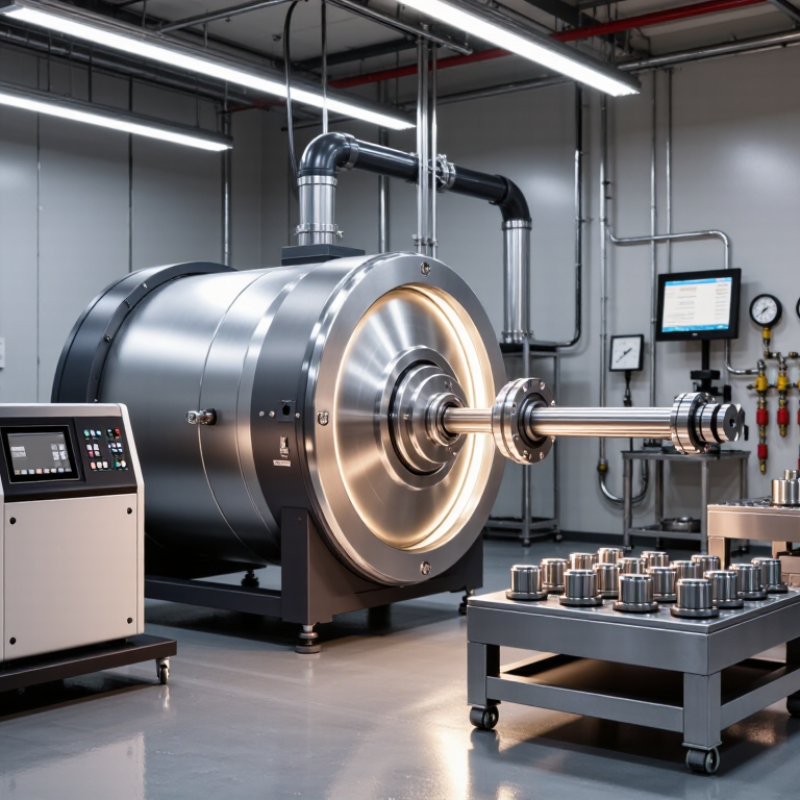
What Is the Best PVD Coating Equipment in 2026?
What PVD Coating Equipment Does and How It Works
PVD equipment deposits a thin film onto a surface inside a controlled vacuum chamber. Pumps remove air, while gas controls and power supplies create the conditions for deposition. In sputtering systems, energized argon ions strike a solid target, releasing atoms that travel toward the workpiece and form a coating. Evaporation systems heat source material until it vaporizes and condenses on the surface. The right setup depends on coating material, part shape, production volume, and required film properties.
A complete system typically includes a vacuum chamber, pumps, a target or evaporation source, substrate fixtures, and process monitoring. Temperature, gas flow, and electrical power all affect film quality. Small changes matter. For example, uneven fixture rotation can leave a shadowed patch on a complex component. SEMI reported that worldwide semiconductor manufacturing equipment sales reached $117.1 billion in 2024. This figure covers many equipment types, not PVD alone, but it signals the scale of investment in precision manufacturing.
Tips: Match the process to the part, not just the coating name. Ask for trial runs using representative components, then inspect thickness uniformity and adhesion. A bright finish can still hide weak bonding. Track maintenance and repeatability, too; these are easy to underestimate when comparing equipment.
PVD in 2026 is not one machine type. It is a family of vacuum processes, each suited to different materials and production needs. Magnetron sputtering is widely used for uniform metal, ceramic, and multilayer films. DC works well with conductive targets; RF can handle insulating materials. High-power impulse magnetron sputtering can produce dense films with strong adhesion, though cycle times and equipment complexity may increase.
Arc evaporation offers high deposition rates and durable coatings, often for cutting tools and wear parts. Its trade-off is droplets, which can leave tiny surface defects. Thermal and electron-beam evaporation suit applications needing controlled, line-of-sight deposition. Complex shapes may need rotating or tilting fixtures. Reactive PVD introduces gases such as nitrogen or oxygen to form compounds inside the chamber. Small gas changes can affect film color and composition. That takes practice.
Systems range from compact research chambers to large batch coaters and automated in-line units. Useful features include substrate rotation, uniform heating, process sensors, and recipe controls. A load-lock can reduce downtime by moving parts without venting the main chamber. The right configuration depends on part geometry, coating thickness, throughput, and maintenance capacity. A spec sheet rarely tells the whole story. Request sample runs with representative parts, then assess thickness variation, adhesion, and finish under realistic production conditions.
Choosing the best PVD equipment in 2026 starts with the parts you actually need to coat. Compare chamber size, fixture capacity, and access for loading, not just the advertised batch volume. The geometry matters. A deep recess or narrow edge can reveal uneven coverage that a flat test coupon misses. Ask how the system controls pressure, power, gas flow, and substrate temperature during a run. These details affect coating consistency and which materials a process can handle. A polished specification sheet is not enough. That matters.
For a fair comparison, run the same parts or representative coupons on each system. Measure thickness at several locations, inspect adhesion and surface finish, and record cycle time, including loading and cleaning. Repeat the test; one good run can mislead. Also compare recipe storage, alarm history, maintenance access, and the time needed to change fixtures. Ask for documented data and define how each result was measured. I would not treat a brochure’s best-case deposition rate as a production promise. It may exclude setup and downtime. A slower system with stable results may fit better than a faster one that needs frequent adjustment. The right choice depends on your coating goals, operators, and production schedule.
The best PVD coating system in 2026 depends on the parts, coating, and production schedule. There is no universal winner. A tool shop coating carbide inserts may need a compact chamber with reliable temperature control and repeatable batches. For decorative hardware, color consistency and smooth coverage across visible surfaces matter more. Small details count.
Magnetron sputtering can suit applications needing controlled, uniform thin films, especially on flat or moderately shaped components. Arc systems can deposit dense coatings efficiently, but droplets may affect surface finish. Thermal evaporation is useful for some light-duty films and temperature-sensitive substrates. Check the material limits carefully. A plastic component may warp before the coating process is complete.
Part geometry also guides the choice. Deep recesses and complex fixtures can create shadowed areas, so test representative parts before investing. High-volume production may favor an inline system, while varied jobs often benefit from flexible batch equipment. Ask suppliers for sample runs, coating-thickness measurements, and maintenance requirements. Keep the test conditions realistic. A polished sample is not proof that every production load will match. I would also compare energy use and chamber downtime, though these figures can be harder to verify than cycle time.
What Is the Best PVD Coating Equipment in 2026?
What to Evaluate Before Choosing PVD Equipment in 2026?
The best system is the one that consistently matches your parts, coating targets, and production rhythm. Start with the substrate and geometry. A tall cutting tool, a flat panel, and a small batch of medical components need different fixture access and plasma coverage. Ask for coating-uniformity data on parts shaped like yours, not only on polished test coupons. Small details matter.
Check chamber size, usable loading area, pump-down time, and batch capacity together. A large chamber can still waste space if fixtures block line-of-sight deposition. Review process controls too: recipe storage, temperature monitoring, arc management, and alarms should be clear to operators. Ask how quickly a process can be repeated after a maintenance stop. Controls look convincing in a brochure. Production is less tidy.
Finally, compare total operating demands, not just purchase price. Request estimates for target consumption, electricity, service intervals, spare parts, and operator training. Confirm that the supplier can support installation, troubleshooting, and coating trials with your actual components. If possible, run a pilot batch and inspect thickness, adhesion, color, and edge coverage. No single test settles everything. I would also leave room for uncertainty: real parts vary, and an impressive sample may not represent a full shift. Choose equipment with documented results, accessible maintenance, and enough flexibility for the work you expect to add.
| Evaluation Dimension | What to Assess | Practical Evidence or Benchmark | Why It Matters When Choosing Equipment |
|---|---|---|---|
| Coating technology | Match the process to the coating, substrate, finish, and production goal. | Magnetron sputtering is widely used for controlled films and alloy or compound coatings. Cathodic arc evaporation is common for hard coatings and produces highly ionized material, but can create droplets. HiPIMS can provide highly ionized sputtered material, with process productivity and power requirements to evaluate. Evaporation is generally line-of-sight and may need part rotation for coverage. | There is no single best process for every application. Request coating samples made with the proposed process on representative parts. |
| Part and load capacity | Check chamber usable dimensions, fixture envelope, part geometry, load mass, and clearance during rotation. | Ask for a layout showing the actual parts and fixtures—not just the chamber’s outside dimensions. Confirm the maximum load for the intended process. | A chamber that fits individual parts may not fit a production load or allow adequate spacing and movement. |
| Thickness uniformity | Assess coating variation across different part positions, surfaces, and a fully loaded fixture. | Request a thickness map from a representative production load, including measurement locations, part orientation, and the stated acceptance tolerance. | Uniformity depends on geometry, source placement, fixturing, rotation, and recipe. A single measurement on a flat test coupon is not enough to predict results on complex parts. |
| Vacuum and process control | Review achievable base pressure, pump-down time, pressure stability, gas control, and monitoring. | Obtain recorded pump-down and pressure data for the proposed chamber and load. Magnetron sputtering commonly uses an argon working pressure in the approximate range of 0.1–1 Pa, but the suitable pressure depends on the process and coating recipe. | Vacuum performance affects process repeatability and contamination control. A quoted base pressure alone does not establish production-cycle performance. |
| Coating quality and adhesion | Define required composition, hardness or optical performance, adhesion, surface finish, and allowable defects. | Set application-specific acceptance tests and request results from parts prepared and coated under production-representative conditions. | Results depend on substrate preparation, cleaning, temperature, bias, coating design, and process settings—not just the equipment model. |
| Substrate compatibility | Verify allowable part temperature, electrical contact, fixture materials, and compatibility with sensitive substrates. | Ask for documented temperature ranges and a trial using the actual substrate, geometry, and any temperature-sensitive components. | Some PVD processes involve energetic particles and substrate heating. Compatibility should be confirmed before committing to a production recipe. |
| Throughput | Compare full cycle time, usable batch size, changeover time, and expected operating schedule. | Request a cycle-time breakdown covering loading, pump-down, cleaning or etching, deposition, cooling, venting, and unloading. Calculate output using the usable load, not only the deposition rate. | Deposition time is only one part of production time. Real throughput also depends on loading, process steps, maintenance, and yield. |
| Automation and repeatability | Inspect recipe control, alarm logging, process interlocks, data export, and repeatable fixture movement. | Confirm that recipes can be stored and controlled, critical process data can be recorded, and operators can trace each run. | Consistent controls and records help reduce operator-dependent variation and support troubleshooting and quality systems. |
| Utilities and installation | Check electrical supply, cooling-water requirements, compressed air, gases, exhaust, floor loading, and service access. | Request a complete utility schedule and site-layout requirements before installation planning. | Unplanned facility upgrades can add cost, delay commissioning, or constrain where the system can be installed. |
| Maintenance and consumables | Evaluate access to sources, shields, fixtures, pumps, valves, and other service items. | Ask for routine-maintenance intervals, consumable life estimates under the intended process, cleaning procedures, and a list of required spare parts. | Maintenance frequency and downtime affect cost per accepted part. Consumable life should be checked against the intended coating recipe and production load. |
| Safety and environmental controls | Review high-voltage and vacuum safety, gas handling, exhaust, interlocks, and applicable local requirements. | Request the safety documentation, gas and exhaust requirements, and a description of protective interlocks for the proposed configuration. | Requirements depend on the gases, process, installation, and local regulations. Confirm them with qualified facility and safety personnel. |
| Acceptance testing and support | Define commissioning tests, operator training, spare-parts availability, and response expectations. | Agree in writing on acceptance criteria such as cycle performance, process repeatability, and results from representative coated parts. | Clear acceptance criteria help establish whether the installed system meets the production requirement, rather than relying on general specifications. |
| Total cost of ownership | Include purchase and installation costs, utilities, labor, consumables, maintenance, downtime, and coating yield. | Compare estimated cost per accepted part using the same load, cycle-time assumptions, quality targets, and operating schedule. | The lowest purchase price may not produce the lowest long-term cost if it has lower usable capacity, higher maintenance needs, or more rejected parts. |
Selection principle: The best PVD equipment is the system that meets the required coating specifications on representative parts, at the needed production rate and total operating cost. Process ranges and performance targets should be confirmed for the specific chamber configuration, coating recipe, and application.