
You have no items in your shopping cart.

Choosing the best Crystal Singing Bowl in 2026 is less about finding a universally “perfect” instrument and more about matching its sound, size, and build to your needs. The Global Wellness Institute’s 2024 Global Wellness Economy Monitor estimated the worldwide wellness economy at $6.3 trillion in 2023, with a projection of $9 trillion by 2028. That figure covers many sectors; it does not measure singing-bowl sales or prove that a particular bowl delivers health benefits. It does, however, show why buyers encounter more products and wellness claims than clear, comparable guidance.
Sound matters most. A bowl’s pitch, sustain, and overtones can shift with its diameter, wall thickness, and mallet. Small differences are audible. Yet polished product photos and dramatic recordings cannot tell you exactly how a bowl will sound in your room. Compare recordings made at similar volumes, check the listed dimensions and material, and look for a clear return policy. When possible, listen in person and notice whether the tone stays pleasant after several strikes. Price alone is a poor shortcut. So is a confident promise of transformation. This guide weighs practical evidence—sound quality, construction, ease of use, and seller transparency—while recognizing that preference remains personal. A beautiful tone may still not suit you. Treat the bowl as a musical or meditative instrument, not as a substitute for professional healthcare.
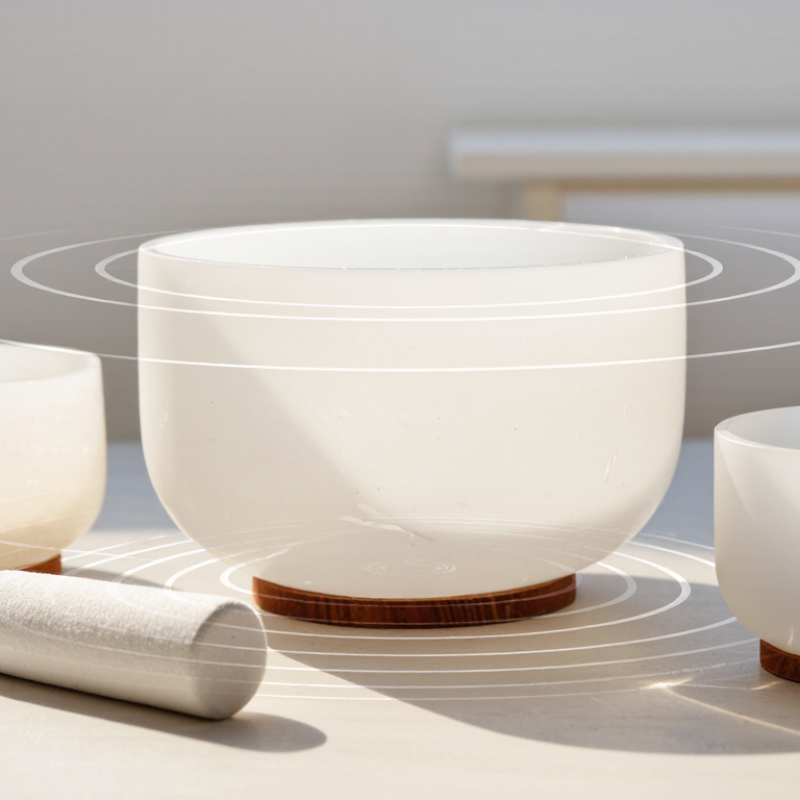
Most modern crystal singing bowls are made from high-purity quartz, a form of silica, rather than carved from mined crystal. Manufacturers shape finely ground quartz in heated molds, then cool and finish each bowl; exact methods vary. The result is a rigid instrument with a smooth surface and a formed rim. Some bowls contain added minerals or colored coatings, so ask what “infused” means and whether it changes the material. Check for chips, uneven edges, and clear care instructions before buying.
A bowl sounds when vibration moves through its body and sets the surrounding air in motion. Drawing a soft mallet steadily around the rim creates sustained friction; a gentle strike makes a shorter tone. Bowl diameter, wall thickness, rim shape, and playing pressure all affect pitch and resonance. Listen longer. A phone recording can distort low notes, while bare walls may make a bowl sound harsher than a rug-covered room. Compare a few bowls at the same distance, using a light touch. One note is not enough. Claims about “healing” or “pure” sound are not technical measures; ask for dimensions, material details, and a return policy.
What Is the Best Crystal Singing Bowl to Buy in 2026?
Size is a useful starting point because it often influences pitch and projection. A larger bowl generally produces a lower tone, while a smaller one tends to sound higher. Lower notes may feel fuller in a quiet room; higher tones can seem clearer but may become sharp in a reflective space. Not always. Bowl shape, material, and playing technique also affect what you hear.
Shape influences how sound develops around the rim and through the bowl. A broad, open profile may produce a spacious tone, while a narrower profile can feel more focused. Wall thickness matters, too. Thicker walls may support a longer sustain, but thickness alone cannot predict sound quality. Uneven walls or a rough rim may affect vibration, so listen rather than relying on appearance.
Compare bowls in the room where you expect to use them, if possible. Strike each gently with the same mallet, then use a light, steady rim motion. Listen for a clear fundamental tone, lingering vibration, and any distracting wobble or harshness. Room acoustics matter. A bowl that sounds warm in a shop may ring differently beside hard floors or bare walls. There is no perfect specification; personal preference still counts.
How bowl size, shape, and wall thickness affect resonance and sustain
Larger bowls generally produce lower fundamental tones, while smaller bowls tend to sound higher. The ranges shown are broad estimates, not standardized specifications: shape and wall thickness also affect pitch, overtones, and sustain. Compare bowls by listening to them under similar playing conditions, since there is no single size or design that is best for everyone.
When choosing a crystal singing bowl in 2026, compare its pitch with a clear reference rather than relying on a product description alone. ISO 16 sets A4, the A above middle C, at 440 Hz. That gives you a useful starting point, not a rule that every bowl must sound that note. Small differences matter.
Strike the bowl gently and let its tone settle. Use a chromatic tuner or a spectrum app, then check whether it identifies the fundamental tone rather than a louder overtone. A4 should read close to 440 Hz; octave equivalents include A3 at 220 Hz and A5 at 880 Hz. Keep the bowl in the same room while comparing, and use a soft mallet consistently. Phone microphones can misread a ringing bowl. I still find this easy to misjudge.
Pitch is only one part of choosing well. Listen for a steady sustain, a clear tone, and a volume that suits your room. If you want a bowl to blend with other instruments, compare each instrument against the same reference. If you prefer a more personal sound, an exact A4 match may matter less than how the bowl feels and sounds to you. Take notes on the measured frequency and your listening impression. They may not agree perfectly.
There is no single best bowl for every buyer. Compare a bowl’s measured pitch with a clearly stated reference note, then consider how its sound and size suit your intended use. The frequencies below are equal-tempered reference values, not measurements of specific bowls.
| Reference Note | Equal-Tempered Frequency | Distance from A4 = 440 Hz | Illustrative ±5-Cent Range | How to Use This Reference When Comparing Bowls |
|---|---|---|---|---|
| A3 | 220.00 Hz | −1,200 cents | 219.36–220.64 Hz | Useful when comparing a bowl intended to sound one octave below the A4 reference. |
| C4 | 261.63 Hz | −900 cents | 260.87–262.39 Hz | Compare the measured fundamental with this target if C4 is the intended note. |
| E4 | 329.63 Hz | −500 cents | 328.68–330.58 Hz | A practical reference for checking whether a bowl is close to the specified E4 pitch. |
| A4 | 440.00 Hz | 0 cents | 438.73–441.27 Hz | The standard tuning reference specified by ISO 16. Use it directly when comparing bowls pitched to A4. |
| C5 | 523.25 Hz | +300 cents | 521.74–524.76 Hz | Compare against this target when looking for a C5 bowl; do not assume the bowl’s strongest overtone is its fundamental. |
| E5 | 659.25 Hz | +700 cents | 657.34–661.16 Hz | Use the target to assess pitch accuracy, and listen separately for the bowl’s overtones and sustain. |
| A5 | 880.00 Hz | +1,200 cents | 877.45–882.55 Hz | Represents one octave above A4 in equal temperament; compare like-for-like measurements in the same octave. |
Notes: ISO 16 specifies A4 = 440 Hz as the standard tuning frequency. The other note frequencies are calculated using equal temperament, with A4 as the reference. The ±5-cent ranges are an illustrative comparison band, not an ISO requirement or a guarantee of audible preference. Actual bowl pitch can vary with playing technique and measurement conditions.
Which Bowl Best Fits Your Practice, Space, and Playing Experience
The best crystal singing bowl in 2026 is not automatically the largest or brightest-sounding one. Choose a bowl that suits how you practice, where you play, and how familiar you are with a mallet. In a small bedroom, a compact bowl may feel easier to control and less overpowering. For group sessions, a larger bowl can carry sound farther, but check that you can lift and steady it comfortably.
Listen for a tone that feels clear without becoming harsh in your room. Hard floors and bare walls can make lingering sound seem much stronger than it does in a carpeted space. If possible, test the bowl with the playing technique you expect to use. A gentle strike and a slow rim stroke can produce different results. There is no perfect match for everyone, and a short shop test cannot fully predict how a bowl will sound at home.
Tips: Set your bowl on a stable, padded surface, then listen from your usual sitting position. Start with a size and weight you can handle easily. If you are new to playing, choose a bowl that responds without heavy pressure. Take notes after testing; memory for subtle tones can be unreliable. I would still leave room for personal preference—sometimes the bowl that measures up neatly is not the one you want to hear every day.
Choose a bowl by its build, sound, and practical support—not by dramatic claims. Examine the rim for chips or rough spots, and check that the base sits evenly on a flat surface. Ask what the bowl is made from and how its pitch is measured. If possible, hear it struck softly and played around the rim. A clear recording helps, but it cannot fully show how a bowl sounds in your room. Small imperfections matter.
Compare the full package. A suitable mallet and stable cushion should be included or priced separately; a low sticker price may hide those extra costs. Grand View Research estimated the global sound therapy market at USD 1.59 billion in 2023, with projected growth through 2030. That figure describes a broad market, not proof that any bowl delivers health benefits. For buying protection, NRF’s 2024 Retail Returns Landscape estimated that 16.9% of U.S. retail sales would be returned that year. This is broad retail data, not bowl-specific, but it makes clear return terms deserve attention. Check the return window, return shipping costs, and whether opened items qualify.
Tip: Ask for an unedited sound sample and written return terms before paying. Compare the bowl’s tone at low volume. A beautiful listing can still leave questions, and I would not treat a higher price as proof of better craftsmanship.